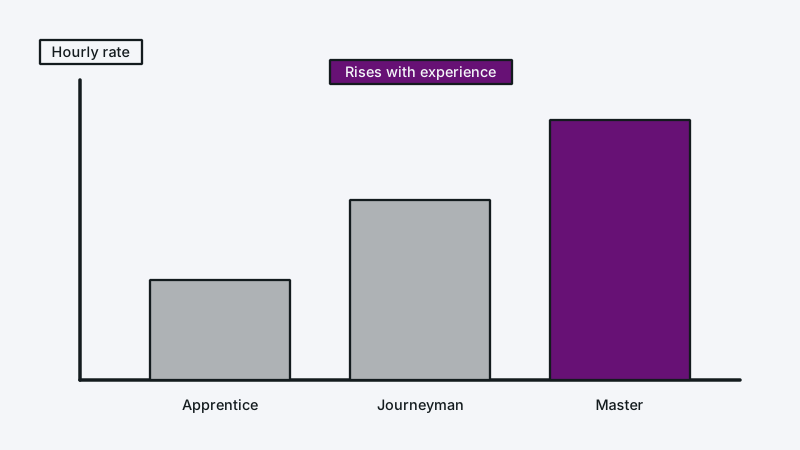
Anyone managing a store, restaurant or apartment block in Burbank wants the hourly number first. Commercial plumbing across Southern California is typically billed in a band from $100 up to $200 per hour. Routine daytime work sits near the bottom, while a master plumber or a night call lands near the top. Take every figure here as an estimate only. What you actually pay is set by the written quote issued once someone has inspected the building.
What is a normal commercial plumber hourly rate in Burbank?
West Coast billed rates typically fall between $100 and $200 per hour, according to a published 2026 rate guide that names Los Angeles among the highest-cost metros. Commercial work tends to run 10 to 30 percent above residential rates. A fair planning figure for a Burbank business is $110 to $180 for a standard weekday visit.
That figure is a billed rate, not a wage. It carries the plumber's insurance, van, tools, parts handling, permit time and office costs. The same guide puts the national spread at $45 to $200 an hour, with most projects between $75 and $150, so California sits above the middle of the country.
Many commercial plumbers also add a minimum charge or a first-hour charge, so a 20-minute repair is billed as a full hour or more. Ask how the first hour and any travel time are counted before you agree to anything. The usual mechanics of that opening fee are explained in the service call cost page for Burbank.
How much does an apprentice, journeyman or master plumber charge per hour?
In the same published guide, apprentice work is billed at about $45 to $90 an hour, journeyman work at $60 to $110 and master work at $90 to $200. On the West Coast each band sits toward the top of its range. Apprentices work under supervision, so a commercial job is rarely billed at the apprentice rate alone.
Here is how the three levels usually split the work on a commercial site:
| Level | Billed per hour (national guide) | What the work looks like |
|---|---|---|
| Apprentice | $45 to $90 | Helps a journeyman, hauls material, handles simple tasks under supervision |
| Journeyman | $60 to $110 | Most service calls, repairs, fixture and drain work |
| Master | $90 to $200 | Complex installs, permits, code questions, supervising the job |
California's own system names these levels differently. The Contractors State License Board gives plumbing contractors a C-36 classification. When you compare quotes, ask which level of worker is on the clock, not just the headline rate.
What does a plumber actually earn per hour in Los Angeles?
The Bureau of Labor Statistics put the mean wage for plumbers, pipefitters and steamfitters in the Los Angeles area (Long Beach and Anaheim included) at $35.35 an hour in May 2023, against $32.62 nationally. CareerOneStop's later May 2024 table shows a Los Angeles median of about $31.30 and a 90th percentile near $60.38. These are paychecks, not what you are billed.
The gap between a $35 wage and a $120 bill is not profit. It covers payroll taxes, workers compensation, liability insurance, vehicle and fuel, tools, parts markup, scheduling and the hours spent travelling or waiting on an inspector. If a business quotes you something close to the wage, ask what is missing from the price.
Homeowners with the same question can use the hourly cost guide for house calls.
Why does the rate change after hours and on weekends?
Emergency, night, weekend and holiday calls are commonly billed at 50 to 100 percent above standard rates, and one source in the rate guide cites $150 to $300 an hour for those windows. The premium pays for people who step off their normal schedule. Some commercial businesses set a flat call-out fee instead of a multiplier.
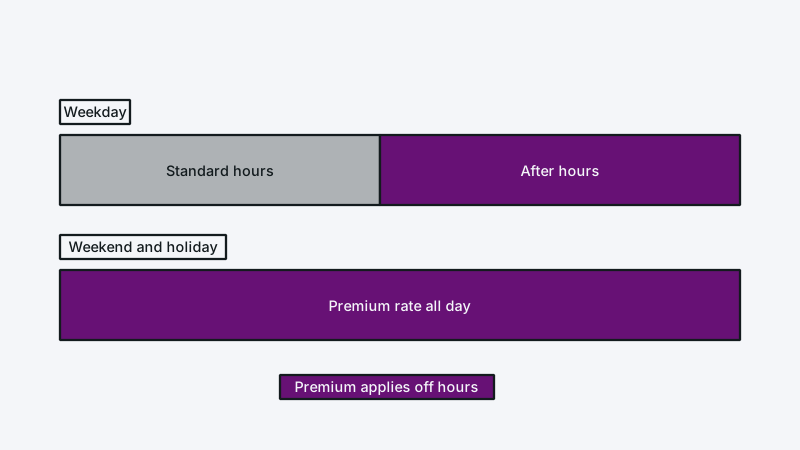
If a burst line is flooding a tenant space at 2 a.m., the rate is not the thing to argue about. What matters is stopping the water, then getting a written scope for the repair. For those situations read about an emergency commercial plumber before you need one, and keep your main shutoff location written on a card at the front desk.
A planned job costs less. Scheduling a backflow test, a grease trap clean-out or a fixture replacement for a weekday morning keeps you at standard rates.
What pushes the price of a commercial plumbing job up or down?
Five factors affect the final bill more than the headline rate: real hours on the job, permit needs, how awkward the pipe is to get at, the parts involved, and crew size. Cast iron buried beneath a slab in a postwar Valley building eats more time than a shutoff valve in a mechanical room.
- Building age. Valley commercial strips from the 1950s and 1960s often have older cast iron or galvanized lines. Old fittings seize, and the job grows.
- Access. Pipe above a finished ceiling, inside a tenant suite you cannot disturb, or below a slab adds labor.
- Permits and inspection. Work that needs a permit through the City of Burbank or LADBS adds fees and waiting time to the bill.
- Parts and materials. Backflow assemblies, water heaters, commercial grade valves and grease interceptors are priced separately from labor.
- Crew size. A two-person crew completes a heavy lift in half the clock time, and the total can match or beat a solo job.
Residential and commercial are treated differently. A home office or live-work unit can fall under either rulebook, and the answer shifts the permit path. State how the space is used when you request a price.
How do I compare commercial plumbing quotes?
Get three items from each plumber on paper: the hourly rate or fixed price, what it covers, and what could change it. A line reading only "$150 per hour" says nothing about the total. A quote naming the work, parts, permit and a not-to-exceed figure makes two bids easy to set next to each other.
A short checklist helps:
- Is the price hourly, fixed, or hourly with a cap?
- Does the first hour or a trip charge apply?
- Are parts and permit fees inside the price or extra?
- Who is coming: a journeyman, a master, an apprentice with supervision?
- When is the work scheduled, and is that inside standard hours?
- Does the plumber hold a California contractor license? Any contractor can be looked up free through the state license board website.
A firm that focuses on commercial work will normally answer all six readily. For a restaurant, office or multi-unit building, request the scope in plain sentences, so a second contractor can price the identical job.
Questions people ask
What is the going rate for a plumber per hour?
Commercial jobs in Burbank and the Valley run near $110 to $180 hourly on weekdays, with nights costing more. Across the country, most plumbing projects bill from $75 to $150. Los Angeles is among the pricier markets, so assume you will land in the top half of any national range. Only the written quote fixes the actual figure.
Is a reasonable plumber hourly rate the cheapest one?
Not necessarily. A cheap hourly number may hide a slow job, added trip fees or parts marked up afterward. A fair rate fits the skill of the worker on site, spells out the first hour, and ends in a total you heard beforehand. Weigh the whole scope against the whole price rather than the hourly figure.
How do I use a plumbing hourly rate calculator?
Take the rate times the hours you expect, then add parts, permit fees and any trip or minimum charge. After seeing the job, a plumber can estimate the hours. Online calculators suit rough budgeting, yet a hard-to-reach pipe changes the hours, so read the result as a starting point.
Do rates from earlier years, such as 2022, still apply?
No. Labor and material costs have moved since 2022, and a 2022 hourly rate is likely low for 2026. Use a recent rate guide or a fresh written quote. The wage data in this page comes from the Bureau of Labor Statistics and CareerOneStop, and billed rates come from a guide published in 2026.
Do I need to be on site for a commercial plumbing visit?
Be there yourself, or send someone you trust, to open up, point out the problem and approve the scope. In a multi-tenant building, the property manager usually arranges access to common areas, riser rooms and the roof. Tell the plumber about alarms, keys and working hours when you book so the clock is not spent waiting at a locked door.
For what the work involves beyond the price, see plumber burbank.
References
Updated