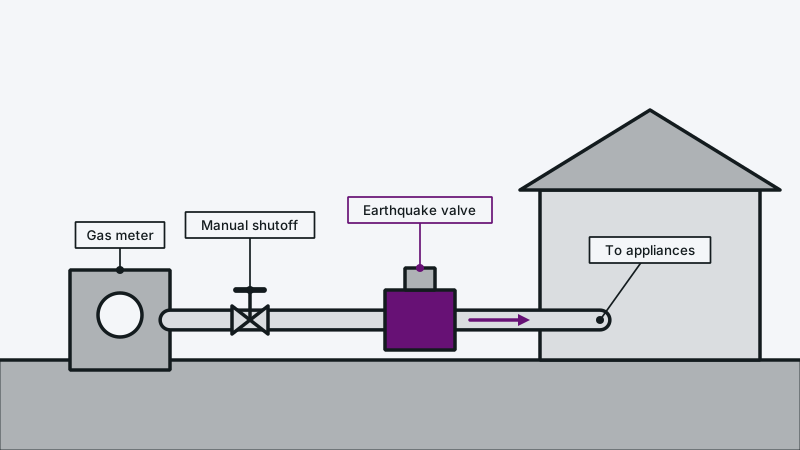
A seismic gas valve is a unit mounted on the gas line that shuts by itself once shaking passes a set strength, stopping the flow into the entire house. In the San Fernando Valley that matters: the 1994 Northridge earthquake was centered under the Valley, and broken gas lines were behind many of the fires that followed. This page covers how the valve works, what moves the price, and the way a visit is set up. It belongs with our gas line work pages.
What is an emergency gas shut off valve for earthquakes?
This is a valve spliced into the gas piping at the meter or just past it on the house side. Inside is a motion sensor, typically a weighted ball or a similar mechanism, that trips once shaking crosses a set threshold and closes the line. It needs no electricity, no phone and nobody present. It stays closed until someone inspects the system and resets it.
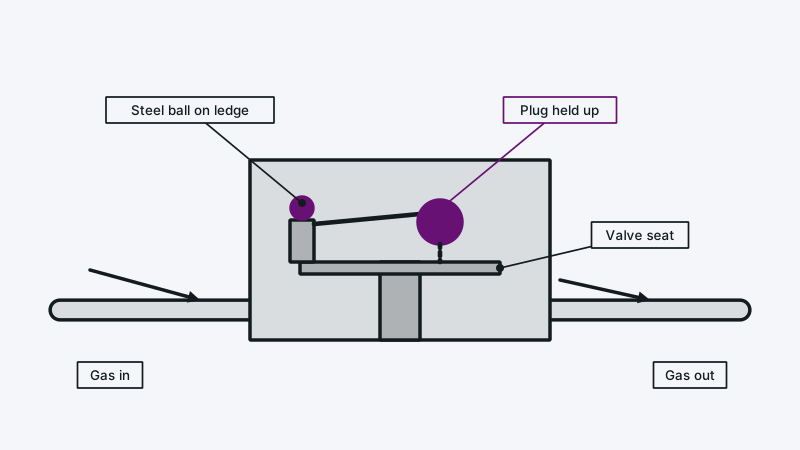
The point is simple. A big quake can slide a house off its foundation, topple a water heater that was never strapped, or tear a flexible connector. Gas then leaks into a building nobody can safely enter. The 1994 Northridge earthquake showed this on a large scale: reports describe numerous fires from broken gas lines after houses moved and water heaters fell over.
Do not confuse it with the manual shutoff at the meter, which depends on you, a wrench and a safe moment. The seismic unit depends on none of those. It also differs from an excess flow valve, which responds to a sudden surge in flow, such as from a snapped pipe, and not to shaking. Ask the plumber which type is in your quote and what each kind will and will not catch.
A valve can also close when you did not expect it, for example after a heavy truck or a moderate shake. That is the device doing its job, not a fault. Our page on resetting the valve after a quake covers the reset.
What changes the price of an earthquake gas shut off valve?
Cost turns on the valve model, its location, how reachable your piping is, and whether permit and inspection are included in the quote. We give no dollar figure here, since we could not confirm one from an official source and an invented number helps nobody. A written quote follows a visit.
Factors that shift the quote:
- The valve itself. Models vary in how they sense shaking, how they reset and how they mount. A few are made for the meter, others for the pipe just beyond it.
- Access. A meter on an open side wall goes fast. One behind a fence, planter or block wall, or on a cramped hillside lot, eats more time.
- The condition of the piping. The valve joins your current gas line. If that line is corroded, too small or fitted with an aged connector, the plumber may have to correct it first. Postwar tract homes, common in Burbank, often still have steel gas pipe that is decades old.
- Permit and inspection. Work on gas piping generally calls for a permit and an inspection from your building department. Burbank addresses use the City of Burbank Building Division, and homes in the Los Angeles city parts of the Valley use LADBS. Find out whether the permit charge is built into the quote or billed apart.
- Extra work found on the visit. Strapping, fresh appliance connectors and a manual shutoff at every appliance often get added.
A fair quote lists the model, the location, the permit and anything left out. For the broader picture, see our page on gas line pipe pricing.
Return to Lankershim Plumbing to see everything else we set up across Burbank and the Valley.
Signs your home needs an earthquake gas shut off valve
A house with gas appliances and no seismic or excess flow valve on the line qualifies. Typical cases are older Valley homes, a water heater parked in a garage or closet, hillside lots prone to sliding, and rentals where nobody has examined the gas setup for years. Check your meter before calling anyone.
Go down this short list:
- No valve at the meter or just past it. All you see is a plain manual valve and pipe.
- An old water heater setup. SoCalGas advises two straps anchoring the heater to wall studs, the lower one set at least four inches over the thermostat controls. If yours has none, correct that as well.
- Rigid or old appliance connectors. SoCalGas suggests swapping semi-rigid aluminum or copper appliance connectors for approved flexible ones.
- A hillside or soft-ground lot where a slope or slab could move.
- A recent gas smell, rusty fittings or a gas bill that jumped with no change in use. Those are leak signs, not seismic valve signs, and they come first.
Smelling gas right now? Get outside and call SoCalGas (1-800-427-2200) from a safe spot. Use 911 if anyone is endangered or SoCalGas does not answer. Inside, avoid switches, lighters and phones.
How does a visit to fit an earthquake gas shut off valve work?
A local plumber visits, examines the meter and gas piping, and puts the valve, permit and price in writing before work begins. We set up the appointment and the written quote. The plumber who installs it pulls the permit, handles the pipe work and books the inspection.
During the visit the plumber typically will:
- Locate the meter and the house-side shutoff and record what is already installed.
- Inspect exposed gas piping and connectors for rust, shifting and leaks.
- Recommend a valve type for the setup and explain the choice.
- Describe the shutdown: gas stays off in the house during installation, so expect no hot water, stove or furnace for a stretch.
- Leak-test the new joints before restoring gas.
Gas piping is regulated work. State rules call for a contractor holding a state license, plus a permit, so skip the weekend project. Get the license number in hand and look it up with the state contractor board before signing.
Does the earthquake valve replace the manual shutoff at the meter?
No. Keep both. The seismic unit covers the situation where no one can act. The manual shutoff covers the one where you smell gas and can act. SoCalGas says to close the meter only when you smell or hear gas or see other leak signs, giving the valve a quarter turn with an adjustable wrench of at least 12 inches until it lies crosswise to the pipe.
After the meter is off, leave it off. SoCalGas states that only its own field employees reopen the gas at the meter, and that interior piping and appliances should be checked before service resumes. Following a widespread earthquake, that can take a long while.
Knowing the meter's position, and owning a wrench you can find in the dark, counts as much as the device. Hang the wrench beside the meter on a hook instead of burying it in a drawer.
Questions people ask
How long is the fitting of a seismic gas valve?
On an easy meter the fitting is usually brief, yet the full job also covers the permit, the inspection and any repairs the plumber turns up. We cannot name a fixed time from here. The written quote should state how long gas stays off and when the inspection falls, so you can arrange your days.
Is this a DIY install?
No. In California, gas piping work needs a contractor holding a California license, plus a permit, and a badly fitted valve risks a leak. You can learn the meter's position, keep a wrench close, strap the water heater and read the maker's notes on your valve. Leave the pipe work to the plumber.
Will the valve shut off for any small tremor?
These valves are built to close at a defined level of shaking, not at every bump. A hard impact or a moderate quake can still trip one, which is normal. If yours closes and you smell no gas, follow the model's reset steps, or have the installing plumber reset it and look over the system.
Does my home insurance or the city require a valve?
Requirements depend on the building type, the date and the city. We have not been able to confirm a current rule for single family homes in Burbank or the Los Angeles neighborhoods of the Valley from an official page. Ask the Burbank Building Division or LADBS, and ask your insurer whether a valve changes your policy.
What if I smell gas after a quake?
Bring everyone outside, prop the door open if that is safe, and step away from the building. Once clear of the house, call SoCalGas at 1-800-427-2200, or 911 where there is danger. Flip no switches and strike no flames. Never try to restart the gas on your own. SoCalGas restores service after the piping has been checked.
How do I ask for a quote?
Head to our quote page. Give us the address, say whether the gas meter sits on a side wall or in a tight spot, and list the gas appliances. We book the plumber visit, and a written quote arrives ahead of the work.
References
Updated