Glendale is its own city, with its own water utility and its own building office, so plumbing work here follows Glendale's rules and not Los Angeles's. A local plumber is sent to your Glendale address through us, and a written quote reaches you before work begins. For the wider picture first, the areas page lists every neighborhood we cover around Burbank.
Why is Glendale water so hard on pipes and water heaters?
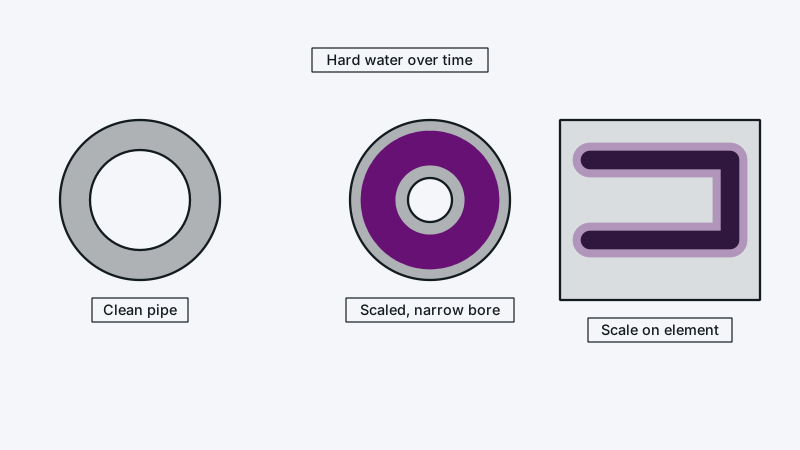
Glendale Water and Power explains that hardness differs from one part of the city to another, since local well water is blended into the supply, and it reported levels averaging above 12 grains per gallon in 2008. On the utility's own scale, anything over 10 is very hard. Hard water leaves scale inside tanks, on heating elements and in shower heads.
The utility says wells supply about 30 percent of the city's water. Well water is generally harder than the imported supply it is blended with, so a street fed mostly by wells can run harder than one fed mostly by imported water. The utility's water hardness page is worth reading for your area before you decide anything about treatment.
What scale does is predictable:
- A tank heater collects mineral sediment on the bottom. It rumbles, wastes gas and wears out sooner.
- A tankless heater is more exposed. Its narrow heat exchanger scales up and flow drops until it is flushed.
- Faucet aerators clog, and valves on dishwashers and washing machines stick.
So in Glendale, a heater visit usually includes a talk about scale. For safe do-it-yourself steps, see removing hard water scale; for treatment costs, the water softener installation price page has them.
What are Glendale houses like, and what pipes are inside them?
Glendale's housing is old. A Southern California Association of Governments profile, using 2017 Census survey data, put 61.8 percent of the city's homes as built before 1970. That is the era of galvanized steel supply lines in the earliest houses, copper from the 1950s on, with cast iron or clay drain lines beneath the floor.
How that plays out depends on the decade:
- Pre-1950 houses. Galvanized steel rots from within. Low pressure, rusty first-draw water and repeated pinhole leaks are the usual signs, and repiping can cost less than a long run of patches.
- 1950s and 1960s houses. Copper supply over cast iron drains. The copper is often sound, but the cast iron can crack, scale over and slow down. See cast iron pipe replacement.
- Foothill houses. Glendale climbs into the Verdugo Mountains, and on a slope, water pressure at the bottom of the street can be high. A tired pressure regulator shows up as banging pipes and split fittings.
- Condos and apartments. A slab leak or stack problem can involve neighbors, which makes finding the source first important. See slab leak detection.
Planning to redo the supply lines in an older house? Replacing plumbing in an old house lists published cost ranges by home size.
How much does plumbing cost in Glendale?
There is no Glendale price list here, since the true price is whatever the written quote says for your house. As a guide only, published national figures run roughly $1,500 to $6,500 for a water heater replacement and $1,500 to $15,000 for a whole-house repipe. Pipe material, house size and access drive those ranges.
Two local factors can add to a Glendale job. Hard water can turn a repair into a scale problem, so the visit may include a flush, a new anode rod or a treatment option. And older houses on slopes can mean awkward crawl space access or a steep drain run, which adds labor.
These pages break the numbers down and list their sources:
- Water heater replacement cost
- Cost of repiping a house
- Hydro jetting cost for stubborn main drain clogs
Ask for the permit and the haul-away of the old tank to be listed as separate lines. That makes one written quote easy to compare against another.
Which rules apply to plumbing work in Glendale?
Glendale permits building work through its own Building and Safety division, and not through LADBS, the Los Angeles department. Contractor and permit-service sites describe water heater replacements as permitted work in the city. The city is the place to confirm the scope for your job before it starts.
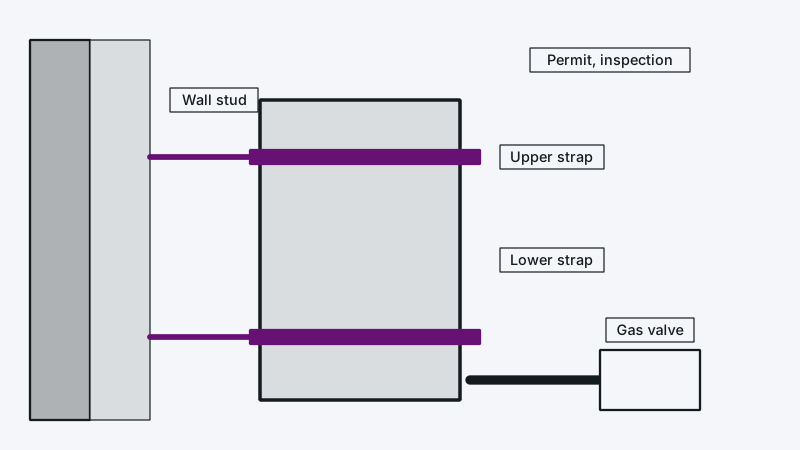
Two more points matter. Every new or replacement water heater in California must be braced or strapped against quake movement, and the inspector looks for it. The city's rebate page for heat pump water heaters says the rebate needs a finished Building and Safety permit, so skipping the paperwork can cost you money later.
Gas piping, main line work and any change to supply lines inside a wall are not DIY work in California. They call for a contractor with a California license, and usually a permit. Our page on permits for water heater replacement covers who files the permit and what the inspector checks.
Smell gas and you walk out first, then phone SoCalGas at 1-800-427-2200 from outside. Add a 911 call if anyone is in danger.
How do you book a plumber in Glendale?
Use the quote page to share your Glendale address, what is going on and when it began. We set up the visit, a local plumber arrives, and you receive the written quote ahead of the work. Nothing is booked on a hunch, and nothing starts without your agreement.
A few things make the first visit faster:
- How old the house is and, if known, what the pipes are made of.
- Photos of the leak, the water heater label or the fixture.
- Whether it is a condo or apartment, since building rules can apply.
- Where the main shutoff is, if you have found it.
Start at the quote page. If your worry is gas after a quake, our guide to the emergency gas shutoff valve after an earthquake is a good first read.
Questions people ask
What does a Glendale plumber charge?
Only the written quote gives the real figure. As a guide only, published national ranges run about $1,500 to $6,500 for a water heater replacement and $1,500 to $15,000 for a whole-house repipe. Older Glendale houses and hard water can add work, so ask for permit and disposal costs to be listed separately from labor and parts.
Does Glendale have its own plumbing rules?
Yes. Glendale permits plumbing work through its own Building and Safety division, and water heater replacements are generally treated as permitted work. Water heaters must be strapped for earthquakes, and gas piping needs a contractor who holds a California license. Confirm the details for your job with the city before work begins.
Is Glendale water hard?
Yes, by the utility's own scale. Glendale Water and Power reports that hardness shifts by area thanks to groundwater blending, and it reported levels above 12 grains per gallon in 2008. Over 10 counts as very hard on its scale. Scale builds in water heaters and clogs aerators, so flushing and treatment matter more here.
Does Glendale use LADWP?
No. Glendale has its own utility, Glendale Water and Power, and its own Building and Safety division. LA neighborhoods in the Valley, such as Sherman Oaks and Encino, are served by LADWP and the city's LADBS. Check your bill if you are unsure which one serves your address.
References
Updated