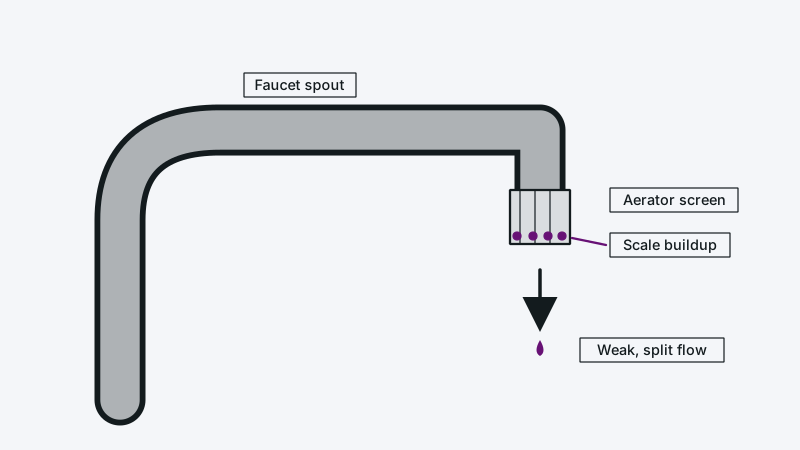
The white crust on your faucet is limescale, and it comes off. The chemistry is simple: scale is mainly calcium carbonate, and weak acids like white vinegar or citric acid will dissolve it. What matters is the surface it sits on, because acid ruins some finishes. Below are the methods by fixture, the mistakes to avoid, and the point where it makes more sense to treat the water than to keep scrubbing. The full picture of whole-house options is on our water softener installation page.
What removes hard water scale?
Mild acid removes it. White vinegar and citric acid both dissolve calcium carbonate, so a soak or a soaked cloth lets the crust lift off with light wiping. Commercial descalers work the same way with stronger acids. Use the mildest product that works, keep it off natural stone, and rinse well afterward.
Scale forms when hard water evaporates or is heated. Dissolved calcium comes out of solution as solid calcium carbonate, which is why it collects around faucets, on shower glass and inside kettles and water heaters. The USGS describes the same thing: heating hard water can leave solid deposits, and long-term flow of hard water through pipes can narrow them.
Start with the gentlest method. If a 30-minute vinegar soak does not shift it, move up to a stronger descaler made for bathrooms, following the label. Do not mix cleaning products. Vinegar plus bleach releases chlorine gas, so never use the two together.
How do I remove hard water scale from a faucet?
Soak a cloth or paper towel in white vinegar, wrap it around the crusted faucet or spout, and leave it 30 to 60 minutes. Wipe, then scrub gently with a soft brush. Take off the aerator and leave it in a cup of vinegar so the mesh clears. Rinse everything and run the tap.
Check the faucet's finish first. Chrome and stainless take vinegar well. Brushed brass, oil-rubbed bronze and some matte black finishes can dull or discolor with acid, so use a short contact time and test a hidden spot, or follow the maker's care instructions. If the faucet came with a care card, it overrules this page.
For a showerhead, fill a bag with vinegar and tie it over the head so the nozzles sit in the liquid. Rubber nozzles can be rubbed clean afterward with your thumb. If the flow is still weak after a soak, take the head off and look for debris in the screen. Weak flow all over the house is a separate problem, which why water pressure is low covers.
How do I remove hard water scale from glass?
Mist the glass with equal parts white vinegar and water, wait 10 to 15 minutes while the acid does its job, then wipe it down with microfiber or a pad that will not scratch. For old, thick spots, lay a vinegar-soaked towel over the area for an hour. Rinse and squeegee dry.
Glass itself is fine with vinegar. The risks are the surroundings. Acid can damage natural stone floors and countertops such as marble and travertine, rubber seals, and some metal frames, so keep it off them and rinse any runoff. If the glass has a protective coating, check the manufacturer's care guidance, since some coatings are not meant to be scrubbed.
Etched glass is different. Scale that has sat for years can leave a permanent frosted look because the surface itself has been pitted. No cleaner reverses that. A fresh coating of water repellent and drying the glass after use are the best ways to keep it clear.
Can I descale a water heater myself?
Draining a few gallons from the tank to flush sediment is a routine maintenance job that many owners do, following the manufacturer's manual. Descaling with acid is a different matter. Gas water heaters involve gas, venting and a pressure relief valve, so leave anything beyond flushing to a plumber.
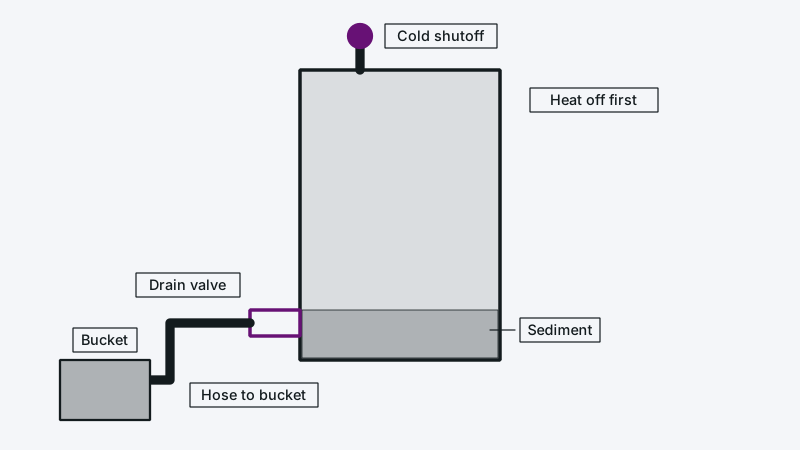
Scale in a water heater acts as insulation. On an electric tank it coats the heating elements, which then work harder and wear out. On a gas tank it settles on the bottom, where the burner heats, and the tank rumbles and runs less efficiently. Sediment that is cooked hard may not flush out at all.
If your water heater is more than about a decade old and rumbles, scaling is part of why. Our guide on when to replace a water heater helps you decide if it is worth saving. A leak, a failed relief valve or a pilot problem are different issues. For gas-side trouble, see water heater pilot light repair. If gas is ever in the air, leave the building, then ring the SoCalGas emergency line, 1-800-427-2200, once outdoors. Call 911 if anyone is hurt or at risk.
How do I stop scale coming back?
Scale returns because the water keeps depositing it, so prevention means changing the water or the habits. Wipe fixtures and glass dry after use, run the exhaust fan, and clean on a schedule. For a lasting fix, soften the water or use a scale-control device.
Prevention options fall into three groups:
- Drying and cleaning habits. A squeegee after each shower and a weekly wipe stop scale from building thick enough to need soaking.
- A salt-free conditioner. Template assisted crystallization changes calcium into tiny crystals that do not stick, so scale forms less on pipes. It does not remove minerals. In a University of Arizona test cited on Wikipedia, it reduced scale effectively, though deposits can still appear where water evaporates.
- A salt-based softener. Ion exchange removes calcium and magnesium and swaps them for sodium. It stops scale at the source. Read salt-based water softener installation for what it takes, or whole-house water softener installation for sizing.
A point worth making plainly: a softener is a convenience and a cost saving on appliances, not a safety item. Hard water is a nuisance and the EPA treats hardness-related guidelines as non-enforceable. Buy one because scale is costing you time and money, not because a salesperson frightened you.
Is hard water scale harmful to drink or touch?
Hard water scale is a nuisance, not a health hazard. Calcium and magnesium are minerals that most people already get from food, and federal secondary standards cover scale and taste as guidelines, not enforceable health limits. The real costs are to appliances, pipes, fixtures and your cleaning time.
The USGS classifies water as soft up to 60 mg/L, moderately hard to 120, hard to 180 and very hard above that. Hardness is expressed as calcium carbonate, and 1 grain per gallon is about 17.1 mg/L, so a sales sheet in grains and a report in milligrams per liter can be converted. Burbank Water and Power publishes a water quality report you can read for your own number. We have not quoted a figure here because it changes with the supply mix.
If you see blue-green stains, the cause may be copper corrosion, not scale. Brown streaks can be iron. Those are a different diagnosis, and a plumber will spot which it is after looking at the pipes.
When should I call a plumber?
Phone a plumber when scale has narrowed a showerhead line or fixture past what cleaning can fix, when every tap has weak pressure, when the water heater rumbles or leaks, or once you decide to treat the water instead of scrubbing forever. The visit comes to your door, and the written price comes before work starts.
Fill in the quote page with what you are seeing: where the scale is, how old the house and the water heater are, and whether pressure has changed. If the pipes are old galvanized or corroded, replacing a section may be the real fix. For comparison, read about a whole-house repipe and what replacing a water heater costs. You can also start at the Lankershim Plumbing home page.
Questions people ask
How can I get rid of hard water scale quickly?
Soak the spot in white vinegar for 30 to 60 minutes, or use a commercial descaler according to its label, then wipe and rinse. Fresh, thin scale lifts in minutes. Old, thick crust needs repeated soaks. Always check the finish first, because acid can damage brass, stone and some coatings.
Does vinegar damage faucets?
On chrome and stainless, a short soak is fine. On brushed brass, bronze, matte black and nickel finishes, long contact can dull or discolor the surface. Test a hidden area, limit the time, rinse well, and follow the faucet maker's care instructions where they exist.
Can I use CLR or similar descalers?
Many products sold for scale are stronger than vinegar and come with their own warnings. Read the label, open a window or run a fan, protect your hands and eyes, and keep them away from natural stone and finishes the label excludes. Never mix descalers with bleach or other cleaners.
Will a water softener remove existing scale?
New scale is what a softener prevents; it will not rapidly dissolve what has already formed. Soft water can slowly loosen some old deposits, but heavy buildup in pipes and heaters usually needs cleaning or replacement. Treat the water to stop new scale, and descale fixtures by hand.
How long does removing hard water scale take?
A faucet soak takes under an hour, glass takes about the same, and a showerhead soak can run overnight. Scale inside pipes or a water heater is not a quick job and may mean replacement. Ask a plumber what outcome to expect.
Must an adult be home while scale gets treated?
For cleaning, you do it yourself. For a plumber visit about scale in pipes or a heater, an adult has to be home to open up access and point out the main shut-off. Ask when you book so you know how to prepare.
References
Updated