Replacing the supply plumbing in an old house typically costs about $2,000 to $9,000 for a small or mid-size home in PEX, and $6,000 to $18,000 or more in copper for a larger one, according to a 2026 published guide. Older homes land in the upper part of a range, thanks to walls, access and patching. Treat these as guide figures: what you pay is whatever the plumber's written quote says. Our Burbank plumber home page covers the other work we line up.
How much does it cost to replace the plumbing in an old house?
Whole-house repipe ranges by size and material come from a 2026 published guide. For PEX, a 1,000 square foot home costs roughly $2,000 to $5,000 with one bath, $4,000 to $9,000 at 2,000 square feet and $6,500 to $15,000 for 3,000 square feet or more. Copper Type L runs about $4,000 to $8,000, $6,000 to $12,000 and $9,000 to $18,000.
| Home size | PEX | Copper Type L |
|---|---|---|
| 1,000 sq ft, 1 bath | $2,000 to $5,000 | $4,000 to $8,000 |
| 2,000 sq ft, 2.5 baths | $4,000 to $9,000 | $6,000 to $12,000 |
| 3,000+ sq ft, 3+ baths | $6,500 to $15,000 | $9,000 to $18,000 |
Per foot of installed pipe, the same guide lists $3 to $6 for PEX and $8 to $15 for Type L copper. Southern California quotes can depart from a national guide, so use the table to judge whether a quote is reasonable, not to fix a budget to the dollar. More detail sits in the cost to repipe a house and how much a PEX repipe costs.
What does an old house add to the cost?
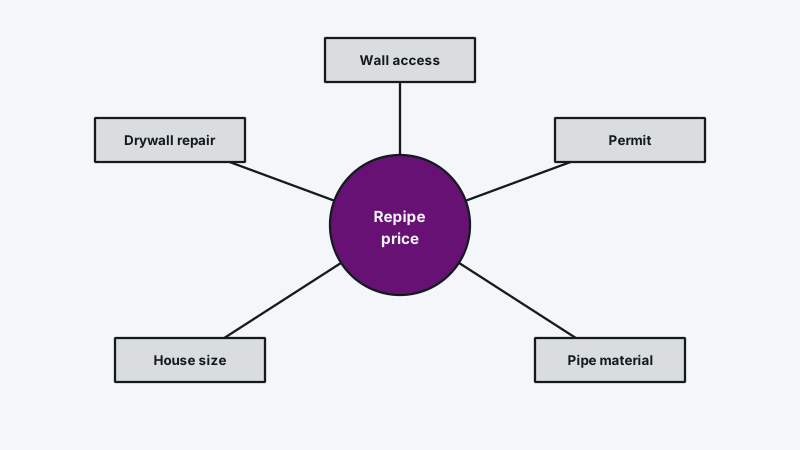
An older house brings extra access work, repairs and surprises. Walls and ceilings get opened to reach galvanized, copper or plastic lines, and patching and painting are frequently billed apart. Concealed damage, aged valves and unusual layouts eat time. Drain or sewer lines may need their own replacement, and permits plus inspection add expense and days.
Line items that show up often in old houses:
- Wall and ceiling access. Opening and patching plaster or aged drywall takes more time than newer walls. Find out if the quote includes patching or ends at rough plumbing.
- Removing old pipe. Leaving dead lines in the wall usually costs less than pulling them, though the plan belongs in writing.
- New shutoffs and fixtures. Worn supply stops and valves are commonly replaced during a repipe, and the plumber may have to reconnect gas to appliances like a water heater or range. Gas work carries its own permit and inspection, so check whether it is inside the quote.
- Pressure control. A new or replacement pressure regulator is common once the old one wears out.
- Permit and inspection. Your building department generally requires a permit for repiping, with the fee taken from its schedule.
Which old pipes are the ones worth replacing in Burbank?
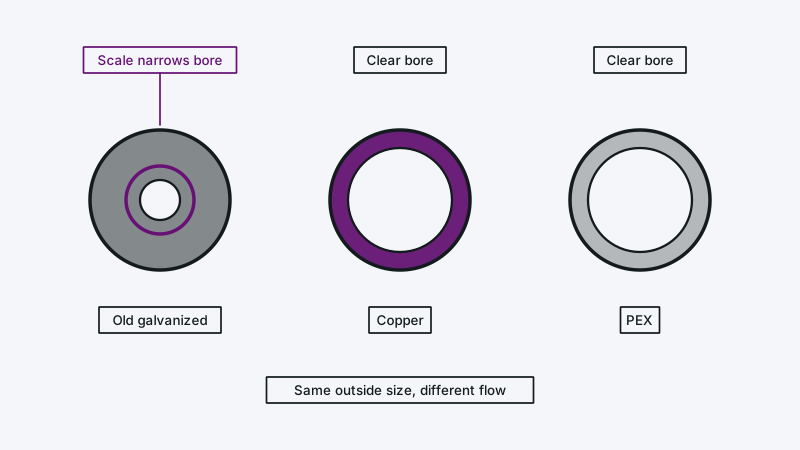
Galvanized steel, polybutylene and any pipe with repeat leaks top the list. Per Wikipedia, galvanized pipe corrodes from within and usually lasts roughly 40 to 50 years. It also says polybutylene, installed in several million homes from about 1978 to 1997, degrades in chlorinated and chloramine-treated water and can fail without warning.
Wikipedia reports that more than 62 percent of Burbank's housing was built before 1970, with tracts built in Magnolia Park between 1945 and 1950, so original galvanized or early copper lines are a real possibility in the city. Learn what you have through a drain camera inspection, a pressure test and a look at any exposed pipe. Published camera inspection prices are around $150 to $400. For drains of that age, see cast iron pipe replacement, and for the reasons to replace, why repipe a house in Burbank.
Unsure if your pipes have lead solder or other legacy materials? Ask the plumber to test or identify them, and ask your water supplier about water testing before work starts. Leave alone any material you suspect holds asbestos or lead.
Is a partial replacement cheaper than a full repipe?
Yes, at the start. Swapping a single section, one bathroom's lines or the kitchen run costs less than the whole house, and it fits when the remaining pipe is in good shape. The catch is that old pipe elsewhere stays old, so a later failure brings another visit, more wall access and a second permit.
A plumber can scope both options. Request one written price for the section and another for the whole house to compare. Weighing materials as well? Our copper versus PEX page sets the two side by side. Where the work belongs to a larger remodel, repiping with the walls already open often costs less than doing it later.
How do you plan and pay for an old house replumb?
Begin with an inspection and a written quote, then settle the scope and timing. According to the slab leak guide, a repipe usually runs three to five days for a 1,500 to 2,500 square foot home, with patching extra. Find out when the water goes off each day, and expect the kitchen and bathrooms to be unusable at times.
Collect two written quotes at minimum. Look up each contractor with the state license board, and read the scope line by line: material, fixture count, permit, patching and cleanup. CSLB stops any down payment at $1,000 or a tenth of the contract price, taking the smaller figure. A quote that sits well under the rest probably omits something, so ask what. Our guide to repiping a whole house walks through the job, and how long a repipe takes covers the schedule.
When should you call a plumber about old plumbing?
Phone one when you notice brown water, dropping pressure, repeated leaks, green corrosion at joints, wall stains or a water bill that jumped for no clear reason. All are typical signs the pipe is nearing its end. After an inspection, a plumber can say whether repair or replacement suits, and put a quote on paper. Ask for a quote and a visit can be set up for you.
Questions people ask
How many days does replumbing an old house take?
A 2026 guide says a whole-house repipe commonly takes three to five days, with drywall patching and painting on top. Old homes can run longer if walls resist opening or surprises appear. Your quote should state the schedule, including daily water shutoff times.
Which questions belong on the list before hiring for old plumbing?
Ask for the license number, then verify it with CSLB. Then ask which material they plan to use, how many fixtures are covered, who pulls the permit, whether patching and painting are included and how they handle damage found in the walls. Get answers on paper, and compare two quotes or more line by line.
Must someone be home during the replumb?
Not for the whole day. Someone should be present at the beginning to point out the shutoff and agree on access, and again for the final walk-through. Water is shut for part of every day, and rooms and the attic must be reachable. Pull furniture and valuables clear of the walls beforehand.
Is it possible to live in the house during a repipe?
Most households manage it, with interruptions. The water is off during parts of the work, and walls are open. Allow a few days of limited kitchen and bathroom use, and ask how the crew stages the work to keep one bathroom usable. A few families book a short stay elsewhere.
Is it worth replacing the plumbing before selling an old house?
That varies. A failing material can turn up in a buyer's inspection and hurt the sale, and a repipe leaves you a written record and a permit to show. The cost may still not return in the sale price. Obtain a plumber's assessment and a quote, then weigh it against offering the buyer a credit.
References
- Pipe repair cost guide: whole-house repipe by material and home size, 2026
- Slab leak repair cost guide, repipe range and timeline, updated March 2026
- Burbank, California, Wikipedia: housing built before 1970
- Galvanization, Wikipedia: galvanized pipe corrodes from the inside
- Polybutylene, Wikipedia
- Los Angeles Department of Building and Safety: plumbing permits and code bulletins
Updated