Across most of California, exchanging one water heater for another counts as permit work, since it involves gas or electrical connections, venting and the water supply. The issuing office depends on where in the Valley you live. The plumber doing the replacement should pull the permit and book the inspection. For the wider picture on repair, replacement and tankless units, see our hub on water heater repair in Burbank.
Do I need a permit to replace a water heater in Burbank?
Yes. Replacing the whole water heater means planning on a permit and an inspection. Plumbing permits for homes inside Burbank come from the city's Building Division. Small repairs to parts inside the heater are generally treated differently, but when in doubt, check with the Building Division first, because the city sets the rules and fees and can change them.
Burbank's current fee schedule is not quoted here, because we could not open the city's pages to confirm the figures. Call or visit the Building Division, or ask the plumber what the permit costs at your address. A like-for-like water heater change is among the simplest permits a plumber pulls.
Which agency issues the permit where I live?
It depends on your address, not on the mailing city. Burbank homes fall under Burbank's Building Division. Glendale homes fall under Glendale's Building and Safety. Homes in the Los Angeles city neighborhoods of the Valley, including Sherman Oaks, Encino, Tarzana, Woodland Hills, Northridge, Chatsworth, Van Nuys and North Hollywood, are handled by LADBS, the city's own building and safety department.

| Where your home is | Who issues the permit |
|---|---|
| City of Burbank | Burbank Building Division |
| City of Glendale | Glendale Building and Safety |
| Los Angeles city neighborhoods in the Valley | LADBS |
| City of Calabasas | The city's building department |
LADBS now runs online at dbs.lacity.gov, and its site mentions express permits for simple projects. We have not confirmed whether a water heater swap qualifies for the express route, so ask the plumber or LADBS directly. If you are unsure which agency covers your property, check your address on the city map or call the agency.
Our neighborhood pages for Glendale, Sherman Oaks and Encino have local notes, and the neighborhoods hub lists the rest.
Who should pull the permit, me or the plumber?
The plumber should. A contractor who pulls the permit answers for the work meeting code and for being present at inspection. An owner who pulls it takes on those duties, and the inspector may question the owner about the work. Have the plumber say who is pulling it and include it in the written price.
Treat with suspicion anyone claiming a full replacement needs no permit, or offering a cheaper price by skipping it. An unpermitted water heater can complicate a home sale, can affect insurance if something goes wrong, and leaves the gas connection and venting unchecked by anyone.
The Contractors State License Board publishes guidance on hiring contractors, and its site has a license lookup. Permit work belongs with a contractor holding the matching California license, which for water heaters is a plumbing contractor.
What does the inspector check on a water heater replacement?
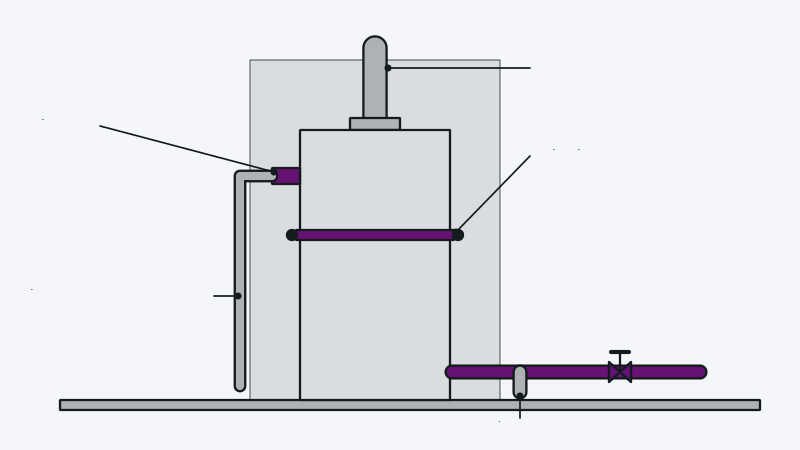
Inspectors focus on whatever causes fires, leaks and earthquake injuries: the gas connection and shutoff, venting on gas units, the pressure and temperature relief valve with its discharge pipe, seismic strapping, clearances, and for electric units the wiring. They also look at the water connections and any expansion control. A plumber who does these every week knows the list.
The items most often corrected at inspection:
- Seismic strapping. State rules say a water heater has to be braced, anchored or strapped against earthquake movement. In the Valley, which sits near several active faults and felt the 1994 Northridge earthquake, this is taken seriously.
- Relief valve discharge pipe. It must run downhill and end where hot water cannot hurt anyone.
- Gas connection. The flexible connector, sediment trap and shutoff valve. Gas work is permit work and a plumber leak-tests it.
- Venting. Gas heaters must vent combustion gases outdoors with the right slope and clearance.
- Expansion tank. Required on closed systems, covered on our expansion tank page.
Should you smell gas at all, get out, phone SoCalGas (1-800-427-2200) from outdoors, and ring 911 if there is any risk to people. Light nothing and touch no switches inside.
Does a repair or a part swap need a permit?
Changing a part inside the heater, such as a thermostat, element, gas control valve, anode rod or relief valve, is usually repair work and often needs no permit. Replacing the whole appliance, changing fuel type, adding a tankless unit or moving the heater does. Cities set their own rules, so confirm with the agency that covers your address.
Our guides on the common repairs explain what each involves: thermostat replacement, gas valve replacement, and relief valve replacement. If a repair turns into a replacement mid-job, the permit question comes with it.
Moving a heater or running new gas line is more than a swap. Our page on gas line installation covers why that work has its own rules.
How do I get a plumber to handle the permit?
Say upfront that the permit must be included, and have it appear in the written price. You can book a visit using our quote page; the written price arrives before work begins. At the visit the plumber can tell you which agency covers the address and what the inspection involves.
If you want to know how arranging a job works, the how it works page explains it, and the Lankershim Plumbing home page covers the other jobs we set up around the Valley. Our cost guide for water heater replacement explains where the permit fits in the price.
Questions people ask
How fast is a water heater permit issued?
For a simple replacement, many cities issue the permit on the day or soon after, and the plumber books the inspection later. Timing varies with the agency and its workload, so ask when you book. If you have no hot water, say so, because some jobs can be scheduled around the inspection.
What happens if I replace my water heater without a permit?
The work may not have been checked for gas, venting, strapping and relief valve safety. You may be asked to get a permit after the fact when you sell or when the city finds out, which can mean opening finished work for inspection. Insurers may also ask questions after a fire or leak. Pulling the permit costs less than fixing that later.
Is a water heater permit different for tankless water heaters?
Tankless water heaters usually need a permit, and often more work, because they need larger gas lines or a bigger electrical supply, special venting and sometimes a condensate drain. The plumber should confirm what your house needs. Our tankless installation price page covers the extra items.
Who do I call to check on a permit in my city?
Contact the building department for your city, or LADBS for the Los Angeles neighborhoods, with the address and the date of the work to hand. Burbank and Glendale run their own offices, and LADBS has its own site and phone line. The plumber can also check whether a permit exists for the address.
Can a handyman replace a water heater?
California requires a contractor license once a job crosses a set dollar amount, and plumbing has a license class of its own. A handyman may only work under that limit and within scope. Request a license number then confirm it through the state licensing board's website before agreeing to anything.
References
Updated