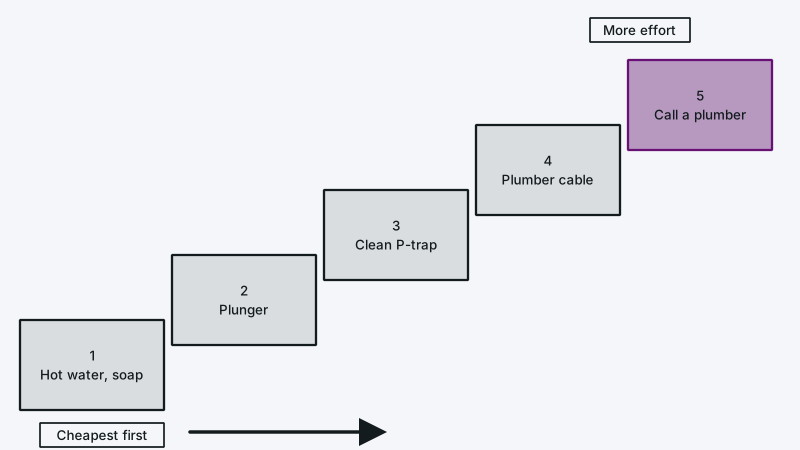
Cooking grease cools, coats the pipe interior, and catches coffee grounds, rice, pasta and scraps in a layer that keeps shrinking the opening. Try hot water with dish soap first, then a plunger, then clean out the P-trap beneath the basin. When the clog comes back, or shows up at a floor drain or a second fixture, it lives in the branch line and means drain cleaning and hydro jetting.
What is the easiest way to unclog a kitchen sink?
Let the hot tap run for a minute, add a generous squirt of dish soap, wait a few minutes, then plunge. That pairing frequently shifts a grease clog. Water still standing afterward means the P-trap needs to come apart for cleaning. Begin with the gentlest step and move toward the trap.
A sensible order:
- Scoop out standing water with a cup so the drain is visible.
- Add dish soap, then follow with the hottest water from the tap.
- Plunge 15 to 20 times using a flat-cup plunger.
- Clear out the P-trap.
- Push a hand auger through the pipe past the trap.
- Phone a plumber if the line still runs slowly.
Boiling water can harm a porcelain or plastic sink, and a plastic trap should never get it. Hot water from the tap does enough against a film of grease.
How do I plunge a double kitchen sink?
Block the other basin before anything else. Jam a wet rag into that drain, or have a helper hold a stopper there, so the force of the plunger goes into the clog instead of escaping. Choose a flat-cup model, make sure water covers its cup, and pump in firm, even strokes. Plug the disposal side as well if one is fitted.
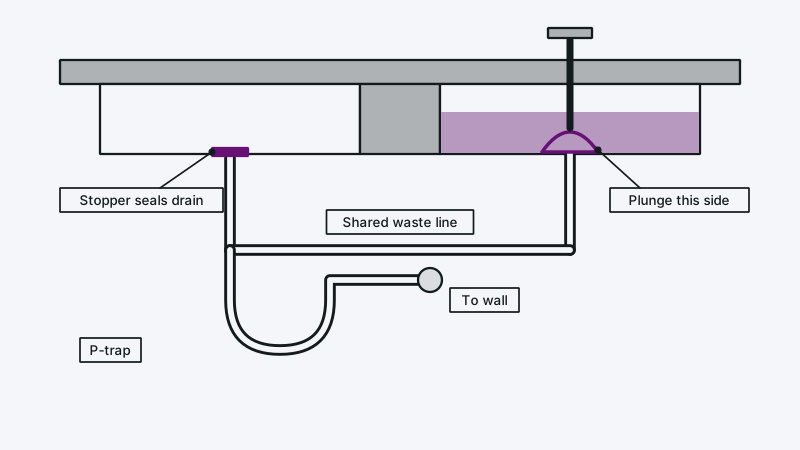
Two basins sharing a disposal is a usual layout in Burbank kitchens. Should the plunger fail to seal on a sink tied to a dishwasher, the hose is bleeding off air, and you may have to pinch or plug the hose at the disposal. Water climbing into the dishwasher as you plunge shows the dishwasher shares the drain path, which our guide to a clogged dishwasher drain deals with.
One basin draining while the other stays slow places the clog just under the slow side, which limits the search to a short piece of pipe.
How do I clean a kitchen sink P-trap?
Position a bucket under the curve, then loosen both slip nuts with your hands, turning them counterclockwise. Lift the curved section away and tip its contents into the bucket. Clear out the grease and food, rinse the piece, and shine a flashlight along the pipe that runs into the wall. Put it back together, snug the nuts by hand, and run water to look for drips.
Valley kitchens from the 1950s to 1970s often have a chrome or aged plastic trap with brittle washers. A corroded nut or cracked pipe is your cue to stop and fit a new trap, a cheap part. Never force a corroded fitting on old galvanized pipe, since the pipe behind it can snap and make a simple clog become a leak.
A garbage disposal brings a second trap into play. With one installed, the blockage often sits at the disposal outlet or in the trap after it. The safe way to free it is described in unclogging a garbage disposal drain. Keep your hand out of a disposal at all times.
What if the sink is still slow after the trap is clean?
A clean trap with water still draining slowly puts the clog somewhere inside the wall or out along the branch line. A hand auger with a 25-foot cable covers part of that run, while a plumber's machine cable or a jetter goes farther and scours the walls of the pipe. Stop pouring products down. Phone a plumber.
Older homes often connect sinks to cast iron or galvanized branches coated inside with thick grease and rust. A camera run reveals the condition. Hydro jetting strips grease off the whole pipe wall, something an auger cannot manage, and our guide on why a sink drains slowly describes the patterns that hint at deeper trouble.
A gurgling toilet or shower while the sink empties, or water rising at a floor drain, means the fault is in the house line rather than the sink.
Should I use a chemical drain cleaner in a kitchen sink?
No. Caustic products burn skin and eyes when they splash, pool in a sink that will not drain, and harm old pipe and garbage disposals. A thick grease plug usually defeats them anyway. After any chemical exposure, the number for Poison Help is 1-800-222-1222, and 911 if breathing becomes hard.
Already used one? Mention it to the plumber before the trap is opened, and wear gloves with eye protection when opening it yourself. Gentler options appear in our guide to a natural remedy for a clogged drain. What a visit costs is broken down in our page on the price to unclog a sink.
If you would rather have someone handle it, pass the details along on our quote page, and we will line up a local plumber to come out.
How do I stop the kitchen sink clogging again?
Grease should never reach the drain, so paper-towel the pans and throw cooled fat in the trash. Fit a strainer, scrape plates first, and once a week run hot water and dish soap through the line. Pasta, rice and fibrous scraps do not belong in the disposal.
Grease causes most of these. Hot, it flows, then it sets in the cooler pipes a few feet under the sink. Cold rinse water makes matters worse because it hardens fat faster than hot does.
Restaurants and homes with heavy cooking may want a scheduled cleaning by cable or jetter, so buildup never grows into a full stoppage.
Questions people ask
How long does it take to unclog a kitchen sink?
A plunger with hot water needs 10 to 20 minutes, and trap cleaning adds about 20 to 30. A plumber using a cable or jetter normally finishes inside an hour, longer if the line is old, inside a wall or calls for a camera.
What should I ask before I hire a plumber for a kitchen sink?
Find out how the price is built, whether a cable run and camera look are in it, how a clog beyond the kitchen branch is handled, and whether repairs like a new trap are quoted on their own line. Have the answers on paper ahead of the job.
Do I need to be home for the visit?
Either you or a trusted adult needs to be present. Access to the sink cabinet, running water and a drain test are all part of the visit. Empty the cabinet of cleaners and trash bags beforehand so work can begin at once.
Why does my kitchen sink drain slowly even though I have a disposal?
A disposal chops food but leaves the pipe beyond it untouched. Grease, starch and ground fibers collect in the trap and branch line. Grind with cold water running, rinse through with hot soapy water, and clean the trap. Persistent slowness means the line past the trap needs a cable or jetter.
Is baking soda enough for a slow kitchen sink?
It handles a light film but is too weak for a true grease clog. Treat it as upkeep alongside hot water. With water standing in the basin, empty the trap by hand over a bucket instead. Our guide to draining a clogged bathtub includes a walk-through of the baking soda method.
The rest of our guides start from Burbank plumber.
References
Updated