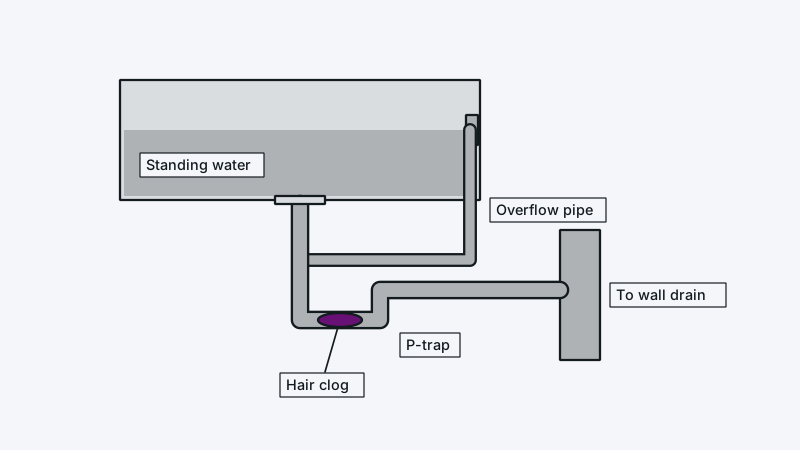
Most bathtub clogs are a wad of hair bound with soap scum, lodged a few inches under the drain opening or wrapped around the stopper. Bare fingers, a drain strip made of plastic, or a plunger will usually get it out. When the water refuses to budge, or a toilet or sink gurgles while the tub empties, the blockage lies deeper, and that calls for a plumber using a cable or hydro jetting.
Why is my bathtub draining slowly or full of standing water?
Hair, soap scum and body oils build up on the stopper mechanism and along the upper stretch of pipe, shrinking the opening until little water gets through. Less often, the clog sits in the trap or in the branch line shared with the bathroom sink and toilet. Standing water after a shower means the drain is mostly or fully blocked.
A quick check separates the two. Turn on the bathroom sink. A slow sink, or gurgling from the tub, puts the clog downstream of where the fixtures meet. A healthy sink means the blockage belongs to the tub's drain alone. Many Valley homes built in the 1950s and 1960s have the tub and sink on a single branch with a cast iron or galvanized section under the floor, and old pipe narrows with scale.
How do I clear a hair clog from a bathtub drain?
Take out the stopper or strainer, pull the hair out by hand or with a barbed plastic drain strip, and rinse using hot water at the tap. Most tub clogs lie within the first six to eight inches of pipe. If water still pools, seat a plunger on the drain, cover the overflow plate and plunge with steady force.
Do it in this order:
- Take the stopper off. A lift-and-turn stopper unscrews counterclockwise. A toggle or push-pull stopper may have a small set screw under the cap. A trip-lever tub has a linkage behind the overflow plate that you pull up.
- Remove the hair. Most of it winds around the stopper stem. Use gloves and pull it out.
- Use a drain strip. A barbed plastic strip costs a few dollars. Push it down, twist and pull the hair up.
- Plunge. Stuff a damp rag into the overflow opening so the force goes to the clog and not out the overflow. Add water until the plunger cup is covered.
- Flush. Let the hot tap run for about a minute.
A trip-lever linkage can slip out of adjustment and hold the plug partly closed. If the tub drains but slowly with the lever down, take the overflow plate off and check the linkage.
Will baking soda and vinegar unclog a tub or a slow kitchen sink?
A thin film of soap or grease in a sluggish drain may break up, but a hair plug or a fully blocked pipe will stay put. Use it as upkeep: 4 ounces of baking soda, 8 ounces of vinegar, a ten to fifteen minute wait, then hot water. For a standing-water clog, pull the blockage out instead.
The same logic applies to a slow kitchen sink. Grease hardens as it cools in the trap and pipe, so the drain slows well before it stops. In a kitchen, run hot water with dish soap, plunge, then remove the P-trap below the sink and empty it. The full steps are in unclogging a kitchen sink. If you prefer to try gentler methods first, see our guide to a natural remedy for a clogged drain.
Never mix baking soda and vinegar with a chemical cleaner. Caustic drain cleaners burn skin and eyes, harm old pipe and do nothing about hair. After any chemical exposure, ring Poison Help (1-800-222-1222).
What if the water will not go down at all?
Water that stays at the same level after plunging means the blockage is solid or deep, and a longer cable or a plumber's jetter is needed. A hand auger pushed through the tub drain can reach a trap-level clog, but it can also scratch the pipe or get stuck at a bend. If you meet resistance and no progress, stop.
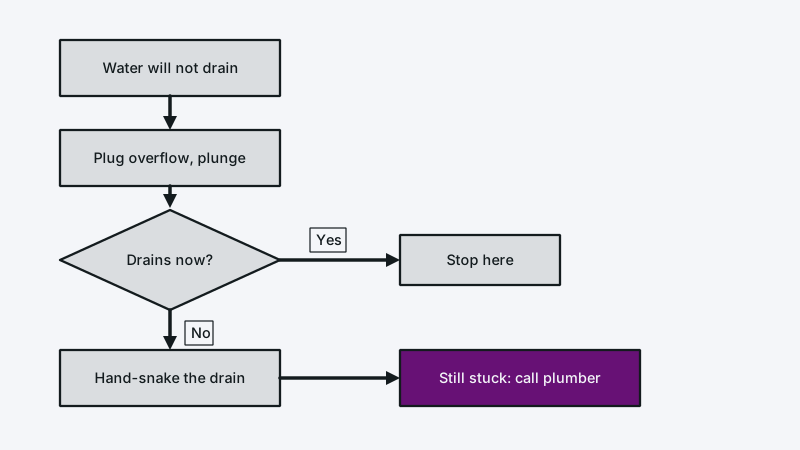
Standing water carries a clue as well. Gray, soapy water that holds its level points to the tub's own drain. Water that climbs when another fixture runs points to the branch the fixtures share, or the main line. In that case no amount of work at the tub will help.
Some older homes have a drum trap, a round can in the floor, for the bathtub. These are no longer used in new construction, and cleaning one properly means opening it. It is a plumber job in most cases.
Why does water pool around my feet during a shower?
If the tub holds water while you fill it but ankle-deep water builds up during a shower, the drain is partly blocked. The pipe still carries water, just not as fast as the shower sends it, so the level rises. A partial clog gets worse over weeks, so deal with it when it first appears.
Water pressure and flow are not the issue here. A shower sending more water than the drain can take tells you the pipe is narrowed by hair, soap scum or, in older homes, rust and scale. A plumber can run a camera to show you the pipe condition, and in many cases a visit with a cable is enough.
For clogs that return after a few weeks, the line past the trap needs a full cleaning. A hydro jetting pass scrubs the pipe wall instead of poking a hole through the clog. Ask for a written price through the quote page and a local plumber visits.
Questions people ask
How many minutes does a tub drain job take?
Clearing hair and plunging runs 15 to 30 minutes. With a cable or jetter, a plumber is normally done in under an hour, a little more if a camera look or tricky access is involved. If a drum trap or a tub trap has to be opened, allow more time.
What should I find out before booking a tub drain job?
Find out how the price is set, if it includes a camera check and a cable run, how a clog beyond the tub is handled, and if any repair needs a permit. Have the answers written down before work begins, and mention any products you have poured down already.
Is it necessary to be present during the work?
Yes, or send a trusted adult in your place. Access is needed to the tub, the overflow plate and often the panel behind it, and the plumber will run water to test the result. Move towels and bottles away from the tub beforehand and describe what you have tried.
Can I fix a toilet overflow tube the same way?
No. A toilet's overflow tube is inside the tank and is not part of the drain. If water runs into it constantly, the fill valve or float needs adjusting or replacing. Our page on plumbing repair for a toilet covers that. A tub's overflow is the plate on the wall of the tub, linked to the same drain.
Is the bathroom sink clogged too?
A slow bathroom sink as well means the clog lies below the junction of the fixtures, so the tub is not alone. For the sink, see clearing a bathroom sink, and a plumber can clear the shared line in one visit.
The rest of our guides start from plumber in Burbank.
References
Updated