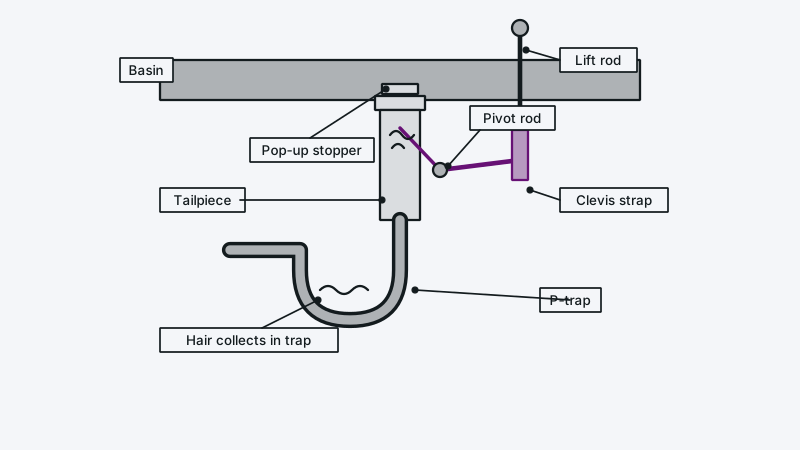
A bathroom sink clog is usually hair, toothpaste and soap scum wrapped around the pop-up stopper rod and settled in the curved trap below. Lift the stopper out, clear it by hand, and if water still sits, take the trap apart over a bucket. If neither helps, or the tub and toilet react, the clog is further down, and a plumber doing drain cleaning and hydro jetting is the next step.
How do I unclog a bathroom sink full of hair?
Lift the pop-up stopper and strip away the hair and slime wound around it. Next feed a plastic barbed drain strip into the drain, rotate it, then withdraw it. Rinse with hot tap water. Hair causes most bathroom sink clogs, and nearly all of it lodges in the first few inches under the stopper.
Getting the stopper out varies:
- Lift-out stopper. Twist and pull upward. Some just lift.
- Rod-and-pivot stopper. Under the sink, a horizontal rod runs through the drain tailpiece. Loosen the thumb nut, slide the rod out of the pivot and lift the stopper from above.
- Fixed strainer. Some sinks have a grid you can unscrew with pliers.
Put gloves on. Rinse the stopper, wipe the rod and the inside of the opening, then reinstall it. Running a drain strip monthly heads off most hair clogs.
What do I do when the bathroom sink has standing water?
Water that will not drain tells you the pipe is mostly blocked. Start with a small cup plunger, covering the overflow hole at the back of the basin with a wet rag. If the water remains, slide a bucket beneath the trap and dismantle it. The blockage nearly always sits in that curve, within arm's reach.
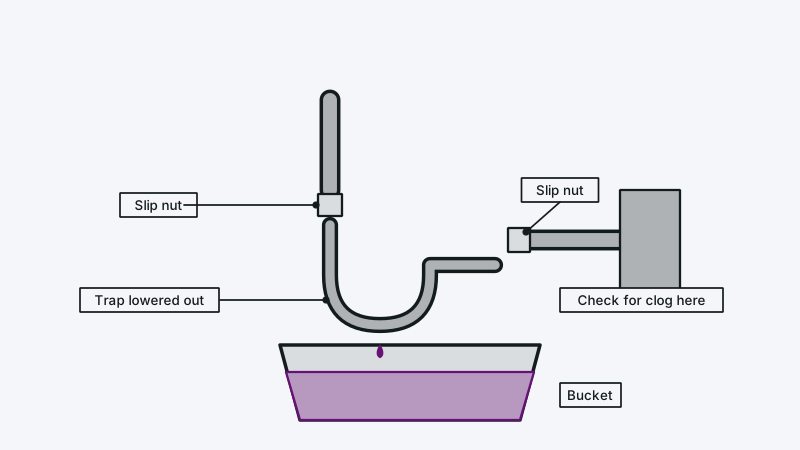
The trap steps:
- Use a cup to remove most of the water so nothing spills.
- Set a bucket below the trap, then turn the two slip nuts loose with your fingers. Reach for pliers only when they are stuck.
- Remove the trap, tip it into the bucket and scrub it with a bottle brush.
- Peer into the pipe heading to the wall and remove whatever you can reach.
- Put it back together, tighten the nuts by hand and watch for drips with the tap running.
Flush with hot tap water rather than a kettle of boiling water, which can soften plastic pipe joints. Keep rings and small parts clear of the basin. A ring that falls in is a reason to stop the water and open the trap.
What if I have tried everything and the sink is still clogged?
With a clean stopper, an empty trap and a plunger that gets nowhere, the clog lies inside the wall or farther along the branch. A hand auger passed through the open trap arm reaches a few feet. Stop if it hits a hard obstruction or if other fixtures respond. A plumber clears that kind with a machine cable or jetter.
Watch the other fixtures. A slow tub or a gurgling toilet while the sink runs indicates the shared branch is blocked. Our page on clearing a clogged bathtub explains how fixtures share a branch. In homes built in the 1950s and 1960s, cast iron or galvanized lines inside the wall develop scale that catches hair from the inside, and a camera visit shows what is going on.
Gurgling at the sink when the toilet is flushed, or bubbling after the sink empties, may signal a venting problem instead of a clog. A plumber can distinguish the two.
Why is the water pressure low at only the bathroom sink?
When just the bathroom faucet is weak and everything else in the house runs normally, the aerator on the end of the spout is frequently choked with mineral scale or debris. Unscrew it, rinse it and soak it in white vinegar for 30 minutes. If flow is still low, the supply valve under the sink may be partly closed or the cartridge is worn.
A drain clog it is not, though people make the same call about it. Water in the Los Angeles area is often hard, and the utility that serves your home, such as Burbank Water and Power, publishes a water quality report you can read for the hardness figure. Scale is the usual reason an aerator clogs.
Inspect the angle stops under the sink. One that is only partly open starves a single faucet, and a recent repair often leaves a valve nudged out of position. If the whole house has low pressure, that is a different problem, covered on our page on low water pressure.
Should I use a chemical drain cleaner?
Skip it. Caustic cleaners burn skin and eyes, pool in a basin that will not drain, and cannot break down a mat of hair. The plumber who opens the trap afterward then has to handle the liquid. Exposed to a chemical? Poison Help answers at 1-800-222-1222, and 911 is the number if breathing is difficult.
Already tried one? Let the plumber know, wear gloves plus eye protection, and stay clear of the trap until plenty of water has flushed it. Milder options are listed on our page about a natural remedy for a clogged drain.
A neighboring fixture gets its own walkthrough in unclogging a kitchen sink. If you would rather hand the job off, enter the details on our quote page and we set up a local plumber to visit.
Questions people ask
How long does it take to unclog a bathroom sink?
Stopper cleaning and plunging run about 10 to 20 minutes, and opening the trap adds roughly 15 more. A plumber armed with a cable typically wraps up within the hour, longer for an old line, a camera inspection or pipe behind a wall.
What should I ask before I hire a plumber for a bathroom sink?
Learn how the price is set, if a cable run and camera inspection come with it, how a main line clog would change things, and whether parts like a new trap or stopper appear as separate charges. Have the figure written down first.
Do I need to be home for the visit?
Yes, you or a trusted adult should be on hand. Vanity access, running water and a final drain test are all part of the job. Clearing out the cabinet beforehand saves time, and do say if anything has fallen down the drain.
Why does my bathroom sink smell after I clear it?
A sour smell comes from the film left in the overflow channel and the trap. Wipe the stopper, let hot water flow for a minute and rinse out the overflow opening. A sewage smell is different: it can mean a dry trap, a blocked vent or a line problem, and a plumber can check.
Is a clogged bathroom drain pipe the same as a clogged sink?
Not always. Sink clogs sit in the trap and branch. A blocked pipe inside the wall is deeper and often hits the tub and toilet as well. When the usual fixes fail, that wall pipe calls for a plumber's cable or jetter.
This guide is one of many on Lankershim Plumbing plumber.
References
Updated