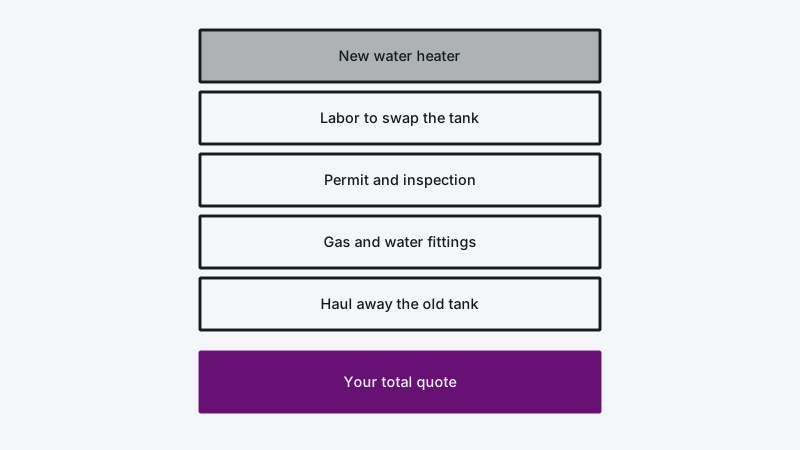
Replacing a gas tank water heater commonly lands between about $874 and $1,765 nationally, and the same guide lists Los Angeles near $1,900 on average. The gas tank units by themselves run roughly $700 to $2,700 by size and model. Venting, gas line work, a permit and disposal of the old unit shift the total. Our water heater repair guide helps you decide whether to replace at all.
How much does it cost to replace a gas water heater?
A published installation guide puts an installed gas tank heater at about $700 to $2,700, with an overall replacement average near $1,293 nationwide and about $1,900 in Los Angeles. A 40-gallon tank is the usual size. These are guides, and the figure on your written quote is the one that matters.
The table below collects the usual line items from that guide. Read each row as a range, not a promise.
| Item | Typical range |
|---|---|
| Gas tank heater, unit and installation | $700 to $2,700 |
| Standard replacement labor | $150 to $450 |
| Taking away the old unit and disposing of it | $100 to $500 |
| Expansion tank, if required | $40 to $350 |
| Permit | $25 to $300 |
| New or modified gas line, if needed | $275 to $825 |
| Power-vent upgrade over direct vent | $300 to $600 more, plus $300 to $500 for wiring |
The wide spread is genuine. A same-size swap in an easy garage spot lands low. A heater squeezed into an attic or a closet with a long vent run lands near the top, and a guide notes that awkward locations raise labor.
What makes a gas water heater replacement cost more or less?
Size, venting, location and gas line condition drive the price most. A 50 or 60 gallon tank costs more than a 40. A heater needing a power vent or new flue costs more than one reusing an existing draft hood. Cramped attics, upper floors and long pipe runs add labor.
What matters most:
- Tank size. Forty gallons is the common choice. Bigger households may need 60 to 80 gallons, at a higher unit price.
- Brand and efficiency. Unit prices span about $350 to $3,500 across all fuel types. High-efficiency models cost more yet burn less gas.
- Venting. Natural-draft venting is simplest. Power-vent models need electricity and add the extra amounts in the table.
- Location. Garages are easiest. Attics, crawlspaces and hillside closets add labor, and one published guide says difficult spots can add 10 to 15 percent.
- Code fixes. Older heaters often lack an expansion tank, proper strapping or a correct discharge pipe, and bringing them up to date is part of the new job.
- Gas line condition. A corroded or undersized line has to be corrected before the new heater is hooked up.
In postwar Valley tract homes the heater often sits in the garage, keeping labor lower. Hillside homes may have it in a closet or crawlspace that is harder to work in. A plumber who has seen the spot can name a firmer number than any website, ours included.
What does a replacement include and what is extra?
A complete job includes the new heater, disconnecting and taking out the old one, connecting gas, water and vent, a new relief valve and discharge pipe, earthquake strapping and a test. Permit, haul-away, an expansion tank, gas line changes and wall or ceiling repair may appear as separate lines. Ask what the price covers.
State law in California says water heaters must be braced, anchored or strapped so they resist falling or shifting sideways in an earthquake, new and replacement units alike. So strapping belongs in the price, not as an optional extra.
Permits usually appear on their own line. The fee depends on the city, and a guide puts the national range at $25 to $300, plus another $50 to $300 when a gas line is involved. For Burbank and Glendale rules, read our water heater permit page.
Put these to any quote:
- Does the price include the permit, and who pulls it?
- Do strapping, the discharge pipe and a new relief valve come with it?
- Is removal of the old unit included?
- How long is the warranty on the tank and on the labor?
- What happens when they find a gas line problem?
Gas work has legal limits. Piping and connections go to a contractor with a California contractor license. At any gas smell, get out and ring 1-800-427-2200 for SoCalGas from outdoors, and 911 if you sense danger.
Is gas or electric cheaper, and is tankless worth it?
Gas tank heaters usually cost more to install than electric ones, yet gas often runs cheaper where electricity is pricey. Tankless units cost more up front, need venting and often a bigger gas line, but can last longer. Bob Vila's figures give an electric tank $600 to $3,500 and a tankless unit near $2,500 on average.
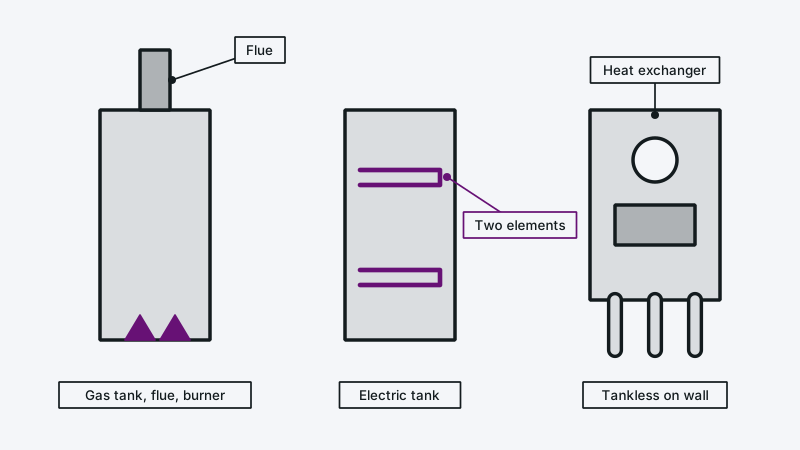
Look at total cost across the unit's life, not only the day-one price. Tanks are usually described as lasting 8 to 12 years and tankless units up to about 20, though maintenance matters. If switching fuels tempts you, note that going from gas to electric can need a new circuit and going tankless can need a bigger gas line, and both add to the quote.
Our other pages go deeper on each choice: tankless water heater replacement cost for tankless, electric hot water heater replacement cost for electric. The tankless vs tank comparison puts them side by side.
For a price on your home, use the quote page and we line up a local plumber to visit, with your price on paper before the job begins. The Lankershim Plumbing home page shows how we operate.
Questions people ask
What is the time needed for a gas heater swap?
Most gas tank replacements run about three to five hours, covering draining, pulling the old tank, setting and connecting the new one, venting, strapping and testing. Gas line changes, venting work or a hard-to-reach spot can stretch that. Hot water is normally back the same day.
What should I ask a contractor before a gas heater swap?
Get a written quote listing the heater model and size, permit, strapping, haul-away and any gas line work. Ask about warranties on the tank and on labor. Verify their California contractor license through the state board, and find out who pulls the permit and books the inspection.
Does someone need to be at home for the swap?
Yes, an adult must be there to open up and approve the work, because the gas, the water and sometimes the power stay off for a stretch of the day. Clear the way to the heater and warn the plumber about gates, pets or parking limits beforehand.
Does the swap need a permit?
Cities in California generally require a plumbing permit for a water heater replacement, and the plumber normally arranges it. Rules and fees come from the building department, so ask the Burbank Building Division, Glendale Building and Safety or LADBS about your address. A skipped permit can cause trouble at sale time.
What is the lifespan of a gas heater?
A tank-style heater usually serves about 8 to 12 years, and hard water can shave two or more years off. Once yours nears that age and starts leaking, rumbling or running out of hot water, replacing it generally beats paying for repeated repairs.
References
Updated