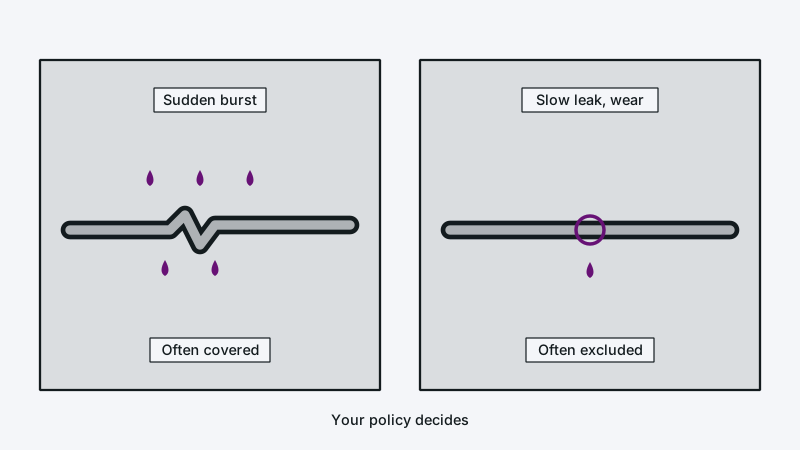
Most standard homeowners policies pay for sudden, accidental harm from a burst pipe: soaked drywall, ruined flooring, damaged belongings. The failed pipe itself is typically your cost, and a slow leak from wear, neglect or poor upkeep is typically excluded. Our business is plumbing, not insurance, so check your own policy. For the wider topic, see our guide to leaks and burst pipes.
Does homeowners insurance cover a burst pipe?
Policy wording and cause decide it. Plenty of policies cover water damage caused by a sudden, accidental burst or discharge, and a few name frozen plumbing as a covered cause. Wikipedia's overview of home insurance notes that burst pipe coverage has been narrowed or dropped in some policies. Reading your own is the only sure answer.
Common patterns, which vary by policy:
- Sudden burst, covered. A supply line splits and floods a room. The damage to walls, flooring and contents is often paid, minus your deductible.
- The broken pipe itself. Often not covered. Many policies treat the repair of the failed part as maintenance. A few pay to get at the pipe, known as access, and that differs between insurers.
- Slow leak over time. Often excluded, as damage from wear, rust, neglect or constant seepage.
- Mold. Often limited or excluded. Wikipedia notes that mold is not standard coverage in the United States.
- Flood and earthquake. Standard policies exclude them. Wikipedia lists flood as generally excluded and earthquake as an excluded peril under special-form policies, and each has its own separate insurance.
That last point matters in Southern California. A burst caused by earthquake movement is an earthquake loss, and a standard policy will not usually cover it. Ask your insurer what applies if you have, or are thinking of buying, earthquake insurance.
What do insurers look at when a pipe bursts?
Cause, timing and your response come first. One sudden event, backed by a plumber's report and photos, is easier to cover than damage that crept up over months. They will also ask whether you acted quickly to stop the water and protect the property, which most policies require.
Questions an adjuster may ask:
- What failed? A fitting, a supply line, a fixture, old galvanized pipe, a frozen section, a pressure surge.
- When did it start? Was it sudden or gradual? A water bill history can show a gradual leak.
- How did you stop it? Did you shut the main promptly, and call a plumber?
- What is the extent of the damage? Rooms, materials, contents.
- Was the home maintained? A policy may exclude neglect.
A plumber's invoice that says what failed and when it was fixed is useful evidence. Ask the plumber to write the cause plainly, and not to guess about blame. Not sure the leak was sudden? Our guide to spotting a burst pipe covers the signs.
What should I do before I file a claim?
Cut the water, protect what you can, photograph everything and phone your insurer. Hold on to receipts, the plumber's report and every ruined item until the adjuster has inspected them. Do not start major demolition or throw things away before documenting, and ask before you sign work orders for large repairs.
A practical order:
- Shut off the main and limit the damage. The first ten minutes are laid out in our burst pipe emergency steps.
- Photograph and film the burst, each wet room, the water meter and the main valve.
- Call a plumber to stop the leak and make a repair. Get a written invoice with the cause.
- Call the insurer to get a claim number, learn the process and find out which emergency repairs it will accept.
- Start drying through a mitigation company if the damage is large. Our page on burst pipe water damage has more.
- Keep a log of calls, dates and names.
The California Department of Insurance has a consumer section on its website with help for questions and complaints. If a claim is denied and you disagree, request the insurer's reasons in writing and turn to the department's help pages.
What costs does insurance pay, and what does it leave to me?
You usually pay the deductible, and the policy may pay for covered damage above it. The cost of the plumbing repair is often yours, while the resulting damage to the building and contents may be covered. Limits and sublimits apply, and some policies cap water damage or require a higher deductible for it.
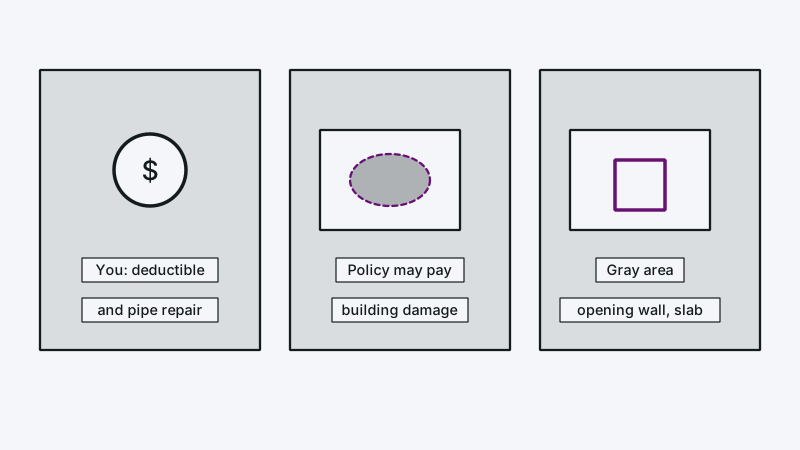
Typical split, in the cases that are covered:
- You: the deductible, the repair to the failed pipe, upgrades beyond what was there before and any excluded items.
- The policy: the covered damage to walls, floors, ceilings and contents, plus drying and cleanup as the policy allows.
- Gray areas: access costs, such as opening a wall or slab to reach a pipe. Some policies include them, some do not, some cap them.
If the choice is between filing a small claim and paying for it yourself, think about the deductible and what a claim may do to your future premiums or renewal. Ask your insurer or agent in general terms before you file, and make no decision on our word.
To plan the plumbing side, our page on plumber leak repair cost explains how repair quotes are built. If you want a written price from a plumber near you, go to our quote page.
How can I lower the chance of a denied claim?
Maintain the plumbing, act quickly and keep records. Insurers deny claims for neglect, so fix drips and small leaks early, replace old supply lines and know where your shutoff is. Read your policy for a water damage clause and for any rule about unoccupied homes, then keep proof of repairs and upkeep.
Steps that help:
- Replace flexible supply lines under sinks and behind toilets when they age. Braided lines can fail.
- Test the main shutoff once a year.
- Consider a smart shutoff or leak sensor. See smart water leak detection. Some insurers offer a discount for one, so ask.
- Heat the home or drain the lines if you leave a house empty in cold weather. See burst pipe prevention.
- Keep invoices for every plumbing repair.
Our Burbank plumbing service covers the repair side of a burst.
Questions people ask
Does insurance cover the cost of fixing the burst pipe itself?
Often not. The water damage that follows may be covered, while fixing the failed pipe is treated as routine maintenance under many policies. Some pay for access to the pipe. Read the wording about the cause of loss and the cost to repair the system, and ask your insurer to confirm.
Is a slow leak covered?
Usually not. Damage from a leak that went on for weeks or months is often excluded as wear, neglect or continuous seepage. A sudden burst gets different treatment. A plumber's report on the cause and timing can matter a lot, and so can the water bill history showing when use jumped.
Are burst pipes from an earthquake covered?
Standard homeowners policies exclude earthquake, and Wikipedia's overview lists earthquake as an excluded peril under special-form policies. A pipe broken by shaking is generally an earthquake loss, so you would need separate earthquake coverage. Ask your insurer what yours includes before you need it.
Should I call my insurer or a plumber first?
Shut off the water, then call a plumber to stop the leak and an insurer to open a claim. Both calls matter on the same day. The insurer can tell you what emergency work it will accept and how to document it. Do not wait on the claim before you stop more damage.
What if I rent?
Your landlord's policy generally covers the building, and your renter's policy covers your belongings. Report a burst to the landlord at once in writing, shut off the water if you can and photograph your property. Ask your own insurer whether your contents loss is covered. Responsibility for the repair is a lease and landlord question.
References
Updated