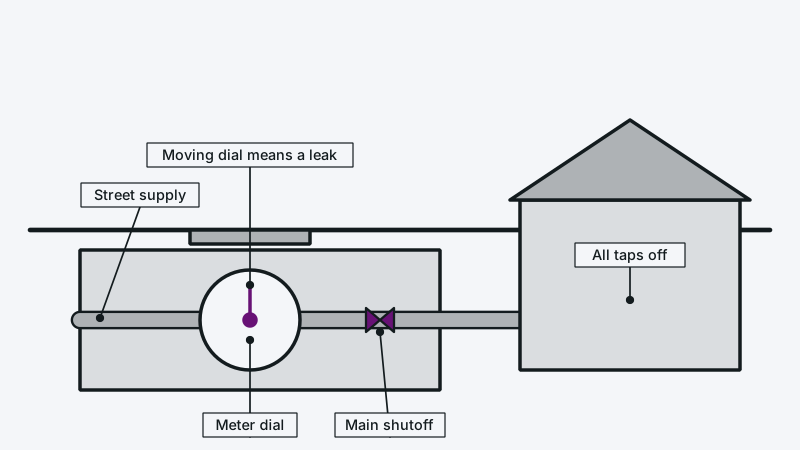
A big water bill with no leak in sight usually traces to a silent toilet leak, an irrigation timer, a hidden line leak, or a shift in how much water the household uses. Begin with a meter test: a meter that moves while everything is off means water is escaping. A still meter means the cause is use, not a leak. This belongs with our help on leaks and burst pipes.
Why is my water bill high when I cannot find a leak?
Because plenty of leaks stay out of view. A toilet trickling into the bowl, a line beneath the slab, a buried yard line and a leaking irrigation valve all lose water unseen. The other explanation is truly higher use: guests, a fresh pool fill, hot weather, a longer billing period or a changed meter read.
The EPA estimates the average family loses about 9,400 gallons a year to leaks, and says a family of four using over 12,000 gallons in a cold month, like January or February, likely has serious leaks. Southern California winters are mild, so treat that figure only as a rough check against your own earlier bills.
Study the bill itself before you start searching:
- Billing period. A 35-day period will look bigger than a 28-day one.
- Estimated read. When the utility estimated a reading, the next actual read can push it upward.
- Usage history. Most bills show several past periods. A gradual climb hints at a growing leak, while a sudden jump hints that something broke or something new began.
- Rate tiers. Some utilities charge more per unit as use climbs, so a small increase can lift the bill more than you would guess. Ask Burbank Water and Power how your tiers work.
How do you find a hidden leak in an hour?
Do the meter test first. Shut off everything that uses water, note the meter and its leak indicator, leave the water unused for two hours, and read again. The EPA describes exactly this test. A changed number means a leak. After that, check toilets, irrigation and the house main to narrow it down.
This order saves time:
- Meter test with all water off. If nothing moves, stop looking for a leak.
- Toilet dye test. Drop a little food dye into each tank, wait ten minutes with no flushing, and look for color in the bowl. Flush right afterward to avoid staining the tank.
- Irrigation. Turn the controller off and repeat the meter test. Our sprinkler leak guide explains a zone-by-zone test.
- Water heater area. Check for a wet floor, a corroded fitting, or water coming out of the discharge pipe on the relief valve.
- House main. Close the house main and watch the meter. If it still turns, the leak lies in the buried line to the house, which underground leak detection explains.
- Appliances that fill themselves. Ice maker lines, a water softener, a pool auto-fill or an evaporative cooler.
Many people quit at step 2 and miss the buried line. Do not skip the main valve test, since it is the most useful split: inside the house or outside.
The full method for reading the dial is in leak detection with your water meter.
Can a toilet cause a high bill without making a sound?
Yes. A flapper that has worn out, or a fill valve that will not seat, lets water slip into the bowl with no audible running, around the clock. The dye test exposes it. The fix is usually an inexpensive part and a short job you can handle yourself.
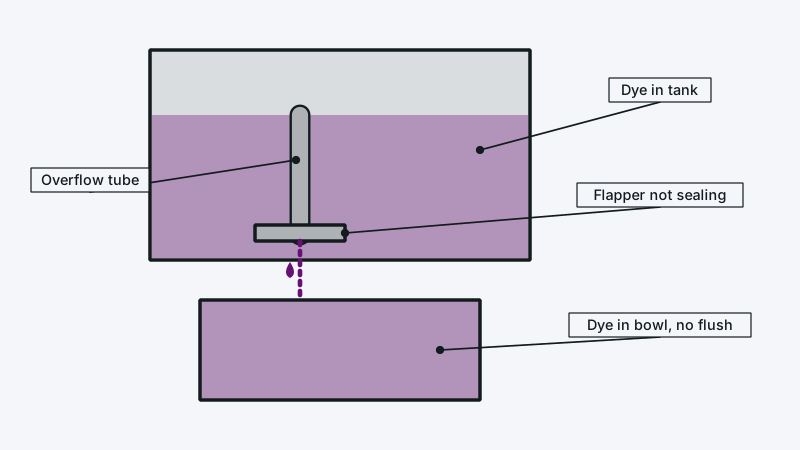
The EPA names worn flappers as a frequent culprit and suggests replacing them at least every five years. Our pages on repairing a toilet flapper and on leaking toilet repair walk you through it. If the dye stays out of the bowl but the meter keeps moving, go on to the other steps.
What if the meter moves and I still cannot find water?
Then the leak sits somewhere hidden: beneath a slab, inside a wall, or along a buried line. Burbank Water and Power's advanced metering offers leak alerts and usage data, and your online account may show water flowing in the dead of night. A plumber can then pinpoint it without opening anything.
Detection gear covers listening devices, thermal cameras and pressure testing, as described on our pages about slab leak detection and acoustic leak detection. Some homes also carry a smart water leak detection unit that watches flow at the main and closes the water if it spots an abnormal pattern.
Fixr's published guide lists detection for slab and similar hidden leaks at roughly $100 to $400, depending on how invasive the search gets. That is a national guide. The real number comes in a quote after a visit, and finding the leak almost always costs less than the water it saves.
A leak in a hot line may also show as a water heater that cycles more than usual, or a floor that feels warm in one place.
When should you call a plumber about a high water bill?
Call if the meter moves with all fixtures off and the toilet test is clean, if you find a damp spot with no source, hear water in a silent house, or see the meter run with the main closed. A bill that stays high after a toilet fix is another reason.
A visit from a local plumber is arranged for you. Have your last few bills and the two meter readings you took on hand, since they help the plumber choose whether to start with the house or the yard. Describe what you found on the quote form. The written quote follows once they have seen the property.
If the bill is already in dispute, ask Burbank Water and Power, or your own water provider, about a bill review and any leak adjustment policy. Their number is (818) 238-3700 on weekdays and (818) 238-3778 after hours. We cannot say which adjustments apply to your account, so ask them.
For causes other than leaks, read why your water bill is so high.
Questions people ask
How long does the hunt for a hidden leak take?
The meter test means two hours of waiting but little effort. A plumber's search with listening gear and pressure tests commonly runs a few hours for a house. One easy source, such as a toilet or an open valve, can turn up in minutes. A leak that appears only under pressure or at night takes longer.
What questions come before hiring a leak finder?
Ask which tools and tests they use, whether the fee includes a written finding, whether you get that fee back against the repair, and what happens if no leak turns up. Have them say plainly if the meter test shows no leak at all. Get the contractor's license number and check it in the state lookup.
Should I be present during the leak search?
Be there when it begins so you can point out the meter, main valve and any trouble spots, and to hand over your bills. A quiet house helps, since listening gear picks up background noise. Pause sprinklers and appliances if asked. Ask to be called before anything is cut or dug.
Will my utility fix a leak on my side of the meter?
Usually not. Utilities generally cover the main and the meter, while the owner covers pipe past the meter. Confirm the boundary with your provider, since rules differ. A leak before the meter is the utility's call. A leak after it is a plumber's job, and your utility can still supply the usage data that proves it.
This guide is one of many on plumber burbank.
References
Updated