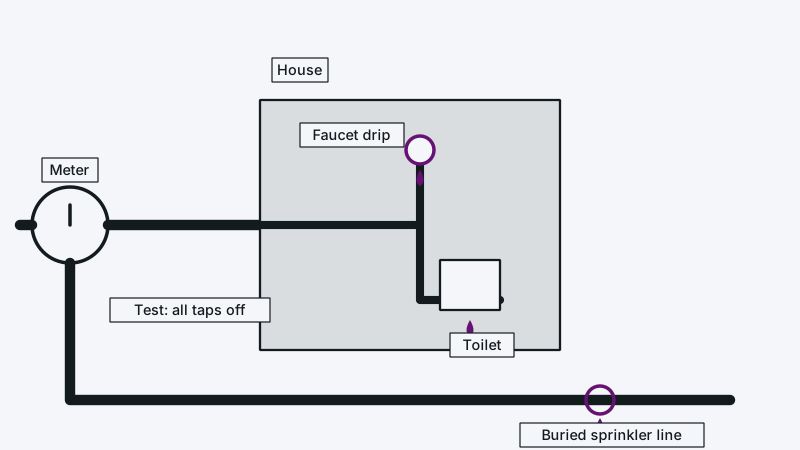
The usual causes of a high water bill, ranked roughly by how often they appear, are a leaking or running toilet, a leaking supply line or irrigation system, more outdoor watering, extra people or guests in the house, a water softener or appliance using more than you think, and sometimes a billing or meter issue. Start by reading your meter, because the meter does not guess. For a hidden leak search, Lankershim Plumbing sets up a local visit across Burbank and the Valley.
How do I tell if a leak is why my water bill is high?
Use the two-hour meter test. EPA says to note your meter reading, hold off all water use for two hours, then take a second reading. A changed reading suggests a leak. Turn off every faucet, appliance and irrigation timer first, and do not flush. If the dial or the leak indicator moves, water is escaping somewhere.
Do the test before and after closing the main shutoff valve at the house. If the meter keeps moving after the main is closed, the leak sits in the stretch from meter to house, often in the yard's service line. If it stops, look inside the house or along the irrigation branch. That narrows the search a lot before anyone opens a wall.
By EPA's figures the typical home wastes upward of 9,300 gallons yearly through leaks, and a family of four consuming above 12,000 gallons a month in winter may have a serious leak. Our guide to leak detection at the water meter goes step by step.
Could a running toilet cause a high water bill?
Yes, and it is the most frequent hidden cause. When a flapper fails to seal, water seeps from tank to bowl day and night, often silently. EPA's dye test exposes it: squeeze several drops of dye into the tank and leave it ten minutes unflushed. Color showing up in the bowl confirms a leak.
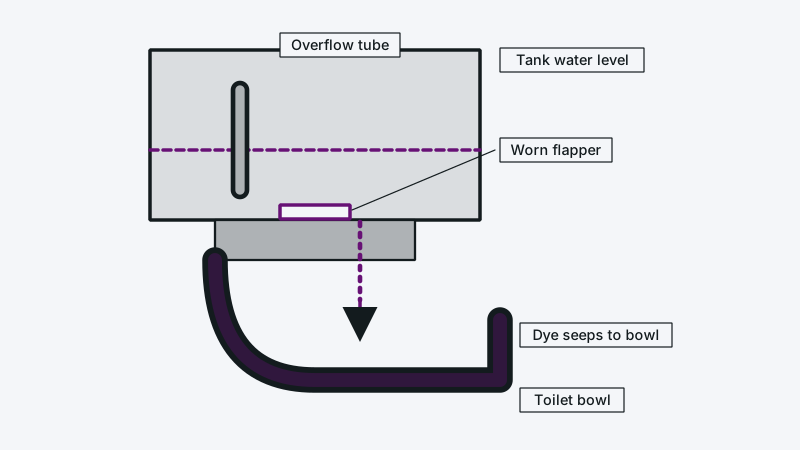
Flush straight after the test to keep the dye from staining the tank. The fix is often a flapper or fill valve costing a few dollars, and many people do it themselves. See fixing a running toilet and replacing a toilet fill valve. Check every toilet in the house, including the one nobody uses.
Can a leaky faucet cause a high water bill?
A dripping faucet adds up over a month, but it rarely explains a large jump alone. A slow drip is noticeable on a bill mainly when several fixtures drip or the drip is closer to a thin stream. Fix drips anyway: it is usually a washer or cartridge, and a leaking shutoff valve under the sink can hide.
Look under every sink and behind the washing machine for wet cabinet floors, swollen wood or green corrosion on copper. A damp spot can mean a slow supply line leak that wastes more than the faucet above it.
How much do sprinklers and outdoor watering add?
Outdoor use is often the biggest piece of a Valley household's water. EPA reports that outdoor watering averages over 30 percent of household use nationwide and can reach 60 percent in arid regions, and Burbank summers are hot and dry. A stuck valve, a broken sprinkler head or a timer set for a longer cycle can double a bill.
Run each irrigation zone and watch for geysers, soggy patches, water running down the street and a zone that will not shut off. A buried irrigation leak will not show on the surface, but it will move the meter. Sprinkler system leak detection covers the checks. Burbank Water and Power lists low-water landscaping rebates on its site, which may offset the cost of converting a thirsty lawn.
Why is my water bill high in winter or in one month?
A single high month often follows a change: houseguests, a new baby, a pool filled, a hose left on, a stuck irrigation valve or a billing period that was longer than usual. Winter bills are high when irrigation is left running in cool weather, when a leak persists, or when the bill includes a delayed or estimated read. Compare to the same month last year.
Check the dates on the bill. A period of 35 days instead of 30 raises the total without any change in use. Look at the usage line, not only the dollars, and see whether the rate or a fixed charge changed. If you use the utility's online account, look at daily or hourly use, if offered, to spot a pattern. BWP lists meter upgrades for leak alerts and usage data among its projects, so ask the utility whether your address has them.
Can a water softener or appliance cause a high bill?
Yes. A softener uses water to regenerate and flush its resin, and a unit that cycles too often or fails to stop can send hundreds of gallons to the drain. A water heater leak, a failing dishwasher or washing machine valve, an ice maker line and a cooling system can all use water you do not notice.
Listen at night for running water, and look at the softener's drain line. If the unit cycles more than the manufacturer says or never stops, call the installer or a plumber. See water softener installation for what a correct setup looks like. If you smell gas near a water heater, get out and contact SoCalGas (1-800-427-2200) once outdoors, and use 911 if someone is in danger.
What if I cannot find a leak and the bill is still high?
Call the utility and ask them to check the meter read and the meter itself. In Burbank, Burbank Water and Power's customer service answers at (818) 238-3700 on weekdays between 7:30 a.m. and 5:00 p.m., with (818) 238-3778 after hours. Glendale Water and Power and LADWP serve other Valley addresses. Ask about leak adjustments, payment plans and budget billing, which BWP lists as a 12-month option.
If the meter confirms use and you cannot see why, a plumber can use listening equipment and pressure tests to locate hidden leaks in a slab or yard. Read high water bill with no visible leak and slab leak detection. Ask the utility if it has a program for leak adjustments, because policies differ.
Banging pipes and a high bill sometimes travel together when pressure is too high. Read about water hammer too.
We are serving homes in Burbank, Sherman Oaks and across the Valley, where hot summers push irrigation use up and a stuck valve can run unnoticed.
Questions people ask
How can I find out where I am using the most water?
Walk through it: toilets, then irrigation, then appliances, then fixtures. EPA's figure is a rough average of 82 gallons per person per day at home. If your use is far higher than that for the people in your house, start with the meter test, then the toilet dye test, then each irrigation zone. Compare the same month year over year.
How much time does leak hunting take?
A visible leak at a fixture can be found in minutes. A hidden leak in a slab, wall or yard can take an hour or more with listening equipment, pressure tests and sometimes a camera. A firmer estimate comes after a look at the meter and your history. The written quote should state the outcome if no leak turns up.
What do I ask when hiring for leak detection?
Request the California contractor license number, the price for finding the leak versus repairing it, whether the diagnosis fee applies to the repair, how they find hidden leaks and what they will do about patching walls or floors. Have the price written down, and verify the license through the CSLB.
Must I be home during a leak check?
Usually, yes. Access is needed to the main shutoff, the meter and any areas you suspect, and you should see the results. When that is impossible, have a trusted adult attend and settle the approved work beforehand. Keep the plumber's written report for your utility or insurer.
Will the utility forgive a high bill from a leak?
Some utilities offer a leak adjustment or payment plan, but rules differ by utility and situation. Ask Burbank Water and Power, Glendale Water and Power or LADWP what applies to your account, and what proof they need, such as a plumber's repair invoice. Ask before paying, and keep copies of every document.
References
Updated