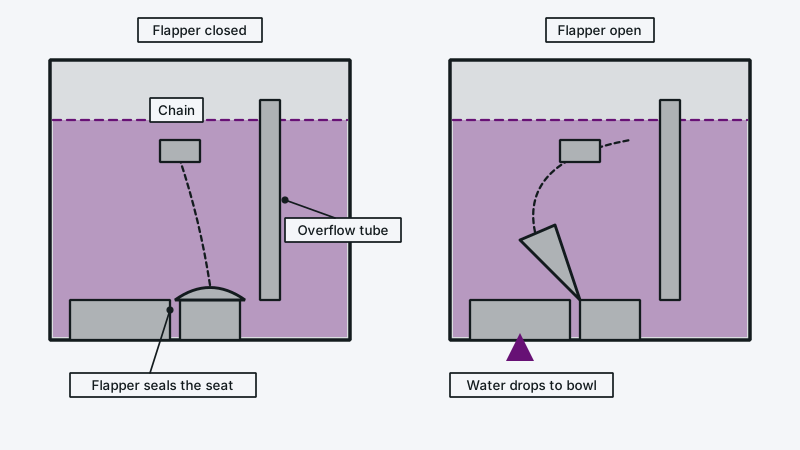
A flapper repair usually means replacing the flapper, because the rubber hardens, warps or picks up grit and stops sealing. The new part costs a few dollars and clips on in minutes. If the toilet still leaks after that, the problem is the seat or the chain, both covered below. This is one of the jobs in our toilet repair overview that most homeowners can do.
How do you know the flapper is leaking?
Squeeze a little food coloring into the tank, leave it ten minutes with no flushing, then check the bowl. Colored water there means the flapper is not sealing. A toilet that tops itself up now and then, with a brief hiss from the tank, suggests the same fault.
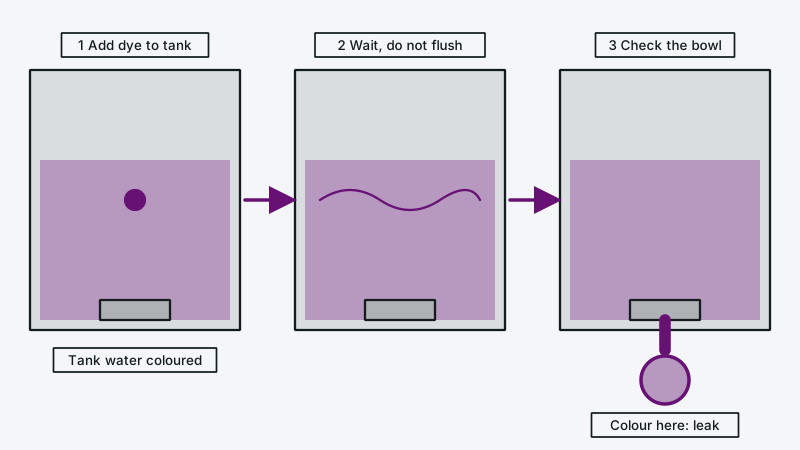
The EPA lists worn flappers among the common causes of toilets that leak silently or flush on their own, and says old flappers can waste thousands of gallons a year. Once the dye test is done, flush so the tank does not stay stained.
Other signs to watch for:
- A toilet that "ghost flushes", refilling a little with nobody near it
- A handle that has to be held down to finish a flush
- A flapper that feels slimy, stiff, cracked or curled when you press on it
- A water meter that creeps with every tap in the house closed
What does a flapper actually do?
The flapper is a rubber seal that covers the flush valve opening in the tank floor. Pressing the handle pulls it up on a chain, the tank water drops into the bowl, and the flapper floats down and seals the opening again while the tank refills.
Because it has to seal under water pressure for years, it is the first part to fail. Heat from a hot garage or a sunny closet in the Valley summer speeds up rubber aging. Chlorine tablets dropped in the tank are another culprit, and many plumbers advise against them for that reason.
Which flapper should you buy?
Buy one that matches the flush valve opening, usually 2 inches or 3 inches across, and the style of your tank. Pull the old flapper out and take it with you, or read the toilet maker's name on the inside of the tank or bowl. Universal flappers with adjustable bands fit many models.
A few practical tips:
- Measure the drain opening it covers, not the flapper's outer ring.
- Two inch flappers are common on older toilets. Three inch flush valves are common on newer, higher flow designs.
- Some flappers have a built in adjustable float or dial. Those let you tune the flush length, but they are fussy on a worn seat.
- If your toilet is a pressure assisted or dual flush model, ask the maker for the right part rather than guessing.
How do you replace a toilet flapper step by step?
Begin by closing the wall valve, then flush the tank empty, unhook the chain, slide the old flapper off its ears or pegs, snap the new one on, reattach the chain leaving some slack, then restore the water and test. Once the tank is empty, expect about ten minutes of work.
The steps in order:
- Close the supply valve where the line meets the wall.
- Flush and sponge out leftover water so the work area is dry.
- Unhook the chain at the handle arm.
- Unclip the flapper from the two small pegs on each side of the overflow tube. Some models use a ring that slides over the tube.
- Wipe the flush valve seat with a damp cloth. Grit and film here break the seal as often as the rubber does.
- Fit the new flapper, centered over the opening.
- Hook the chain up so it has roughly half an inch of play. Too tight and the flapper never closes. Too loose and it will not lift enough.
- Open the water, let the tank fill, and run the dye test again.
If the chain has more than a few links hanging, clip off the extra with pliers so it cannot tangle under the flapper.
What if a new flapper still leaks?
Check the seat first. The seat is the ring of plastic or brass the flapper presses against. Run a fingernail around it. Pits, scale or a rough edge keep the flapper from sealing, and cleaning with a non-scratching pad often fixes it. A cracked or badly pitted seat means the whole flush valve has to be replaced.
Our page on toilet flush valve repair covers that job and the option of fitting a new flush valve over the old seat. Look also at the water level. If it is too high, the overflow tube gets the water instead of the flapper being at fault, and a fill valve repair is the better fix.
How much does it cost to have a plumber replace a flapper?
The part is cheap, so the visit is what you pay for. Hourly rates commonly run from about $45 to $200, sometimes with a service call fee on top, so a flapper alone seldom justifies its own trip. It makes sense to bundle it with other fixes.
If you are booking someone anyway for a leaking shutoff valve, a fill valve or a toilet that rocks, ask for the flapper to be replaced in the same visit. How those rates and fees add up is laid out in our guide to hourly plumber pricing. Prices vary, so read any number here as a rough guide and expect the quote to arrive in writing before anyone starts.
When should you call a plumber instead?
Bring in a plumber when the tank is cracked, the shutoff will not close, the flush valve seat is damaged, or the toilet leaks around its base, where a wax ring is the likely cause. Those faults need parts and tools beyond a flapper kit, and a missed leak at the base can rot a subfloor.
A local plumber can come to you anywhere around Burbank and the Valley. Postwar homes in particular can hide old multi turn shutoff valves that seize or drip once disturbed, and that is a better job for someone with a spare valve on the truck. Ask for a quote with a short description of what you see, and the Lankershim Plumbing home page covers our other work.
Questions people ask
At what age should a flapper be swapped out?
The EPA recommends replacing flappers at least every five years. In practice, replace one sooner if you see the toilet refill on its own, the dye test shows color in the bowl, or the rubber feels sticky, warped or brittle. Hard water and in-tank cleaning tablets shorten flapper life, so checking once a year is sensible.
Can I repair a toilet flapper instead of replacing it?
Rarely. Cleaning the flapper and its seat sometimes restores a seal if the problem was grit or slime. Once rubber has hardened, cracked or curled, nothing restores it, and a new flapper costs only a few dollars. Replacing it is faster and more reliable than trying to patch it.
Why does my toilet flapper not close?
Usual causes include a chain pulled too taut or snagged, a worn or warped flapper, a pitted seat, or a handle arm that sits too high. Check the chain slack first, then look for debris on the seat. If the flapper is lifting but will not drop, the chain may be catching on the handle arm.
Is a leaking flapper a plumbing emergency?
No. It is a slow leak, and it wastes water and raises your bill, but it will not flood the house. Fix it soon. If you see water on the floor, or a leak at the supply line or shutoff valve, shut the water at the wall and treat that as urgent.
Does the water have to be off when I swap a flapper?
Yes. Close the supply at the shutoff and drain the tank, which keeps the area dry and stops refilling while you work. The flapper sits underwater, and the chain and pegs are hard to reach with the tank full. Open the valve slowly afterward and watch for leaks.
References
Updated