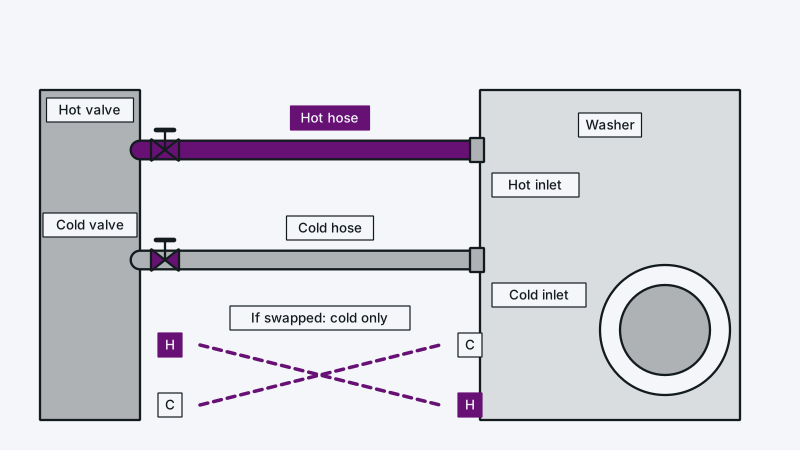
Before you blame the appliance, open the hot faucet at the closest sink. When that water stays cold as well, the heater is at fault, and our page on water heater repair in Burbank is the place to start. When the sink runs hot but the washer fills cold, look at the washer's hoses, screens or valves instead, and most of those checks take under half an hour.
Why is my washing machine not getting hot water?
Usual culprits: swapped supply hoses, a hot shutoff valve that is shut or only partly open, a blocked inlet screen, a dead inlet valve inside the machine, or a cycle that calls for cold water on purpose. When every hot faucet in the house runs cold too, blame the heater instead.
Newer washers lean on cold water more than most owners realize. Eco and "cold" modes, plus some quick cycles, never ask for hot. Look at the dial before you unscrew anything. Pick a cotton or heavy duty cycle, set the temperature to hot, and see if the fill comes in warm.
A quick sorting table:
| What happens | Most likely cause |
|---|---|
| Hot taps in the house are cold too | Water heater problem |
| Hot taps fine, washer fills cold on every cycle | Hose, screen or inlet valve |
| Washer fills warm on some cycles only | Temperature setting or control board |
| Fill is slow and weak on both temperatures | Clogged inlet screens or low supply pressure |
| Warm water was fine until a recent move or repair | Hoses connected to the wrong valves |
Could the hoses be hooked up backward?
Yes, and it is the first suspect after a new washer, a move or any pipe work. The hose on the washer's hot inlet has to attach to the hot supply valve on the wall. The hoses are often marked red for hot and blue for cold, but the color bands can be missing, and the washer's own inlets are labelled H and C.
Check the wall box or the pipes behind the machine. Hot is usually on the left, as in most layouts, though older homes with reworked pipes can break that pattern. A simple test: run a nearby sink on hot and feel which pipe at the wall warms first. Then confirm the hot hose runs to that valve.
With both hoses on the right valves and the fill still cold, go on to the screens.
How do I clear the inlet screens?
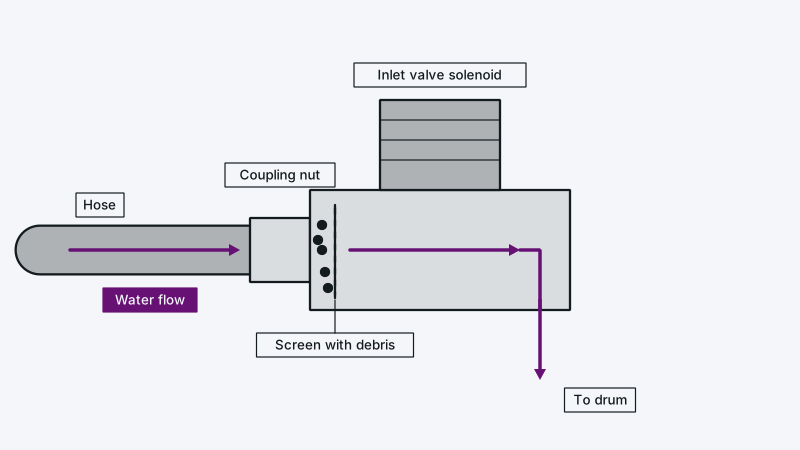
Shut both supply valves, back the hoses off the rear of the washer, and peer into each inlet for a small mesh screen. Rinse away grit and scale, seat the screens again and reattach. A plugged hot screen means a slow or missing hot fill, and Valley water holds enough minerals to plug them eventually.
The sequence:
- Unplug the machine so nothing can start.
- Close the hot and cold valves behind it, with a bucket or towel under the hoses.
- Unscrew each hose. Expect some drips.
- Shine a flashlight into the inlet. Lift the screen out with pliers, or scrub it in place with a soft brush.
- Inspect the washer end of each hose, which holds a small rubber washer and sometimes a screen.
- Reattach, crack the valves open slowly and watch for drips.
Rubber hoses past roughly five years can swell or crack, and braided stainless replacements cost little and are worth fitting. A split hose floods a laundry room fast, so swap them while you are back there.
Is the water heater too far from the washer?
Sometimes. In many Valley ranch homes the laundry sits in the garage, putting the washer either right beside the heater or far from it. A long pipe run means the first water in is cold, and a short fill can end before warmth arrives. A recirculation loop or a longer fill can help.
The heater's temperature setting matters too. Many tanks leave the factory near 120 degrees Fahrenheit, fine for most cycles but lukewarm once the pipe sheds heat. Washers with their own heating elements warm the water themselves for sanitize cycles, so the heater need not run at its highest.
Tankless units are one option when the heater has to go, and our other guides compare them with a new tank. An old tank with slow recovery can run out of hot water at the washer right after someone showers. See how often a water heater needs replacing for signs the tank is close to done.
What if the washer's inlet valve has failed?
Inside the washer sits a pair of solenoid valves that open to admit hot and cold water. When the hot one fails, every cycle fills cold even though the supply is hot. That is an appliance repair rather than a plumbing job, so call an appliance technician or the maker.
To prove the plumbing side is sound, show that hot water reaches the hose end. Detach the hot hose, aim it into a bucket, open the valve, and see whether it runs hot within a minute or two. If so and the washer still fills cold, the pipes are not to blame.
You can ask us to set up that check through the quote page. The visit can cover supply testing, new shutoff valves behind the washer and fresh hoses, which is often all it takes.
When is a no hot water washer really a water heater problem?
When other faucets run cold too, or warm only for a moment. A washer draws plenty of hot water per cycle, so a failing element, a gas heater with a pilot fault, or a tank that has lost capacity shows up at the washer first. Test the shower and kitchen before spending money on the appliance.
On the heater side, our guides on no hot water from an electric heater, no hot water from the shower and why you have no hot water walk through the checks. A gas tank whose pilot keeps going out calls for the gas safety notes there before you relight anything.
The Lankershim Plumbing home page lists the rest of what we arrange around Burbank and nearby Valley neighborhoods.
Questions people ask
Why does my washer only fill with cold water?
Either hot water is not arriving, or the machine is not requesting it. Start with the cycle setting, then the hose connections, the hot shutoff valve and the inlet screens. A cold nearby sink points at the heater. A hot sink points at the washer.
Can a clogged filter cause no hot water in a washer?
Yes. The screens behind the hoses trap grit and mineral scale. Once the hot side plugs, the fill may come in cold or very slowly. Close the supply, remove the hose, rinse the screen and put it back. With hard water they clog every few years, and clearing one takes about ten minutes.
How long should I wait for hot water to reach the washer?
Open the closest hot faucet and time the wait for warmth. At a minute or more, a washer fill can end before warm water gets there. That is a long pipe run, not a defect. A plumber can look at recirculation or moving the supply if it bothers you.
Is it safe to fix the water inlet valve myself?
The valve belongs to the washer, which runs on mains electricity. Unplug the machine before opening it, and hand the job to a technician if appliance repair is not your thing. Hoses, screens and shutoff valves behind the washer are simpler, and a plumber can do those. Call the maker if the washer is under warranty.
Do I need a permit to replace washer shutoff valves?
Swapping a worn washer valve box or shutoff usually counts as a repair, not a new installation, and often needs no permit, though rules vary by city. Burbank's Building Division and LADBS in the Los Angeles neighborhoods can confirm. A water heater replacement is different and usually does need one.
References
Updated