A water heater replacement in a Valley home is a one-day job in most cases: the old tank comes out, the new one goes in, and the permit inspection follows. The decisions that matter come first. Fuel type, tank or tankless, capacity, and who pulls the permit. This page walks through those in the order you meet them, and ties back to our water heater repair hub if a repair might still be the better call.
How do I know my hot water heater needs replacing?
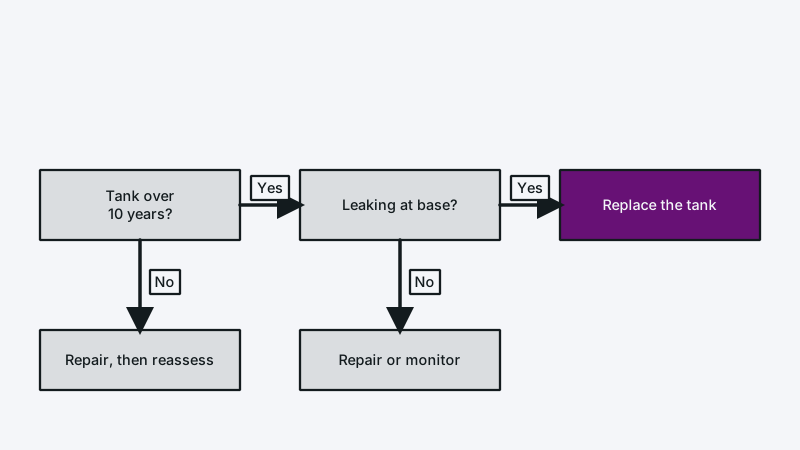
Look for a puddle beneath the unit, rust-tinted hot water, rumbling or popping sounds, hot water that fades fast, and an old tank. Once the steel shell leaks, no repair will hold. Other problems, such as a failed thermostat, pilot or element, may be repairable on a younger tank.
What to weigh:
- Leaks from the tank itself. When water weeps through the shell or its seams, replace the unit. Leaks from fittings or the relief valve line are often repairable.
- Age. Tank heaters wear out. Our guide to how often a water heater needs replacing covers lifespan and what shortens it.
- Repeated repairs. Two or three service calls in a year on an older tank usually mean the next failure is close.
- Brown water from the hot tap while the cold stays clear. The tank is corroding from inside.
- Sediment noises. Popping and rumbling mean a thick scale layer on the floor of the tank, which Valley hard water speeds up.
If the heater is still young and the fault is one part, repair is cheaper. Our pages on pilot light repair and thermostat replacement cover two common ones.
How much does a hot water heater replacement cost?
The price depends on the unit, the fuel, access to the heater, whether the venting, gas or electrical connections need work, and the permit. We cannot give a single figure that fits every house. Standard tanks cost less than tankless or heat pump models, and installation labor follows the same pattern, and a swap in an open garage costs less than one in an attic.
For ranges that explain the line items, see water heater replacement cost, gas water heater replacement cost, electric water heater replacement cost and tankless replacement cost. Treat them as rough guides. The figure you can rely on is the written quote you get after someone has seen the heater.
Things that raise a quote above the basic swap:
- Moving the heater or changing its fuel type.
- A new gas line, larger flue or new 240 volt circuit.
- Code items missing from the old setup, such as seismic strapping or a proper relief valve discharge line.
- An expansion tank, if your system needs one.
- A heat pump or tankless model, which cost more to buy and install.
Should I choose gas, electric or tankless?
Keep the fuel you have unless there is a reason to change, because conversion adds work. Gas tanks heat fast and cost less to run in many homes, electric tanks are simpler to install, and tankless water heaters give endless hot water but need bigger gas or electric supply. Each has tradeoffs, and a plumber can price your house.
A short comparison:
| Type | Good for | Watch out for |
|---|---|---|
| Gas tank | Fast recovery, families with high demand | Venting, gas line condition, combustion air |
| Electric tank | Simple install, no vent | 240 volt circuit, slower recovery |
| Heat pump electric | Low running cost | Space, airflow, higher upfront price |
| Tankless | Space saving, continuous hot water | Larger gas line or electrical supply, flush maintenance |
Our guide on electric versus tankless water heaters goes deeper on that choice. Water heater standards in California are tightening over time. The California Energy Commission says its 2025 Building Energy Efficiency Standards take effect on January 1, 2026, and we have not confirmed how they affect water heater types, so check with whoever quotes the job about which rules touch your replacement, and whether your utility offers rebates.
What happens on replacement day?
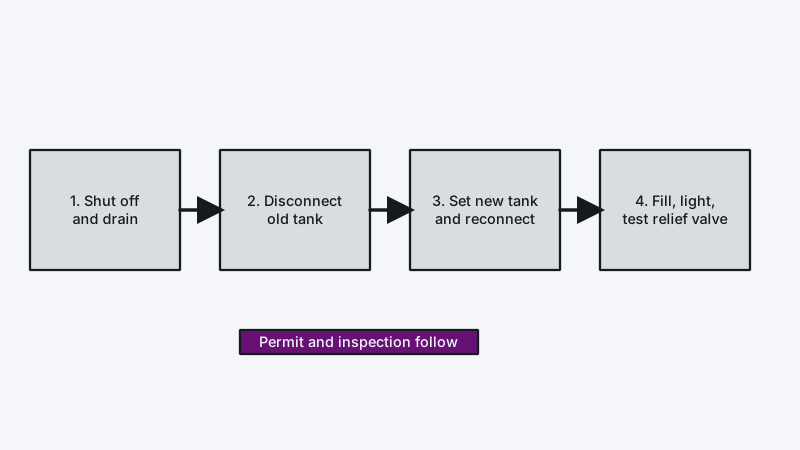
The installer closes off gas or power and then the water, empties and hauls out the old tank, then fits the new one with fresh connectors and a relief valve line that meets code. It gets strapped, filled, fired up and tested for leaks and gas tightness. Then the permit inspection follows. Most jobs run a few hours.
Typical order:
- Utilities off, tank drained through a hose.
- Old heater disconnected and carried out.
- New heater set in place, on a stand or drain pan where required, then braced against movement.
- Water, gas or electrical connections made, relief valve and discharge line installed, and an expansion tank added if needed.
- Tank filled, air purged at a hot tap, gas leak-tested with a solution or meter, and the burner or elements started.
- Venting checked on gas units, temperature set, and a walkthrough with you.
Expect no hot water during the work and a bit longer while the new tank heats. A forty to fifty gallon tank often needs an hour or more to heat from cold.
Do I need a permit to replace a water heater?
Normally yes. Burbank's Building Division, Glendale Building and Safety and LADBS each issue permits for their own areas, and the installer should pull it and book the inspection. State rules also call for earthquake bracing on every water heater. Read our page on permits for water heater replacement for who covers your address.
Be wary of a quote with no mention of a permit. An unpermitted install can cause trouble at resale or when you file an insurance claim, and nobody checks the gas, venting or relief line. Before agreeing to anything, look up the contractor with the state licensing board.
Gas safety is not optional. If gas ever smells present near the heater, everyone goes outside first. From there, ring SoCalGas (1-800-427-2200), or call 911 where someone may be in danger.
Can I replace a hot water heater myself?
It is possible, but we advise against it for gas units, and the permit still applies. Gas connections and venting must be right, a bad connection can leak, and a tank full of hot water is heavy. If you do it on an electric unit, the 240 volt connection and the permit are still the sticking points.
Do-it-yourself advice ends where the law demands a licensed contractor or a permit. A gas unit falls on that side of the line. A well-meaning swap that skips strapping or a proper discharge pipe can fail in an earthquake or a pressure event. See our do-it-yourself repair guide for the work homeowners can safely take on.
What should I ask before I hire someone to replace my water heater?
Insist on a written price listing the exact model, labor, permit, parts and haul-away. Find out who handles the permit, what the manufacturer warranty covers, if labor falls under it, and a California plumbing license held by the contractor. Also ask the length of the job and whether you must be home.
To get a written price, use our quote page. Each step is laid out in how it works, and other plumbing work we arrange around Burbank and the San Fernando Valley is listed on the Lankershim Plumbing home page.
If the heater has failed without warning and you have no hot water today, our page on emergency hot water heater repair explains how to cope until someone arrives.
Questions people ask
How many hours will the crew be at the house?
Most replacements take a few hours on site, from draining the old tank to testing the new one. Gas units with venting changes, electrical upgrades or permit inspections can take longer, and a tankless conversion can run most of a day. Hot water returns after the new tank has heated, often an hour or more after startup.
What will a replacement set me back?
It varies with the unit, the fuel, the access and the permit, so no single figure fits every house. A standard tank swap costs less than a tankless or heat pump model. Our cost pages give a rough sense, and the actual price is whatever the written quote says after a visit.
When does a tank heater reach the end of its life?
A tank heater typically lasts for roughly a decade or somewhat more, depending on water quality, maintenance and the tank itself. Hard water, no flushing and no anode rod service shorten that. Leaks and rust mean it is time regardless of age. Our guide on replacement age gives more detail.
Does an aging heater deserve a repair?
Usually not if the tank is leaking or well past its expected life. Repairs make sense on a younger tank with one failed part. If you have paid for several repairs in a short span, put the money toward a new unit that carries a warranty and meets current code.
Do you have to stay home while it is swapped?
An adult needs to open up the space, field questions and approve the finished work. The job needs the water and often the gas or power off for a while. If the heater is in a locked space, arrange access in advance, and confirm the expected duration beforehand.
References
Updated