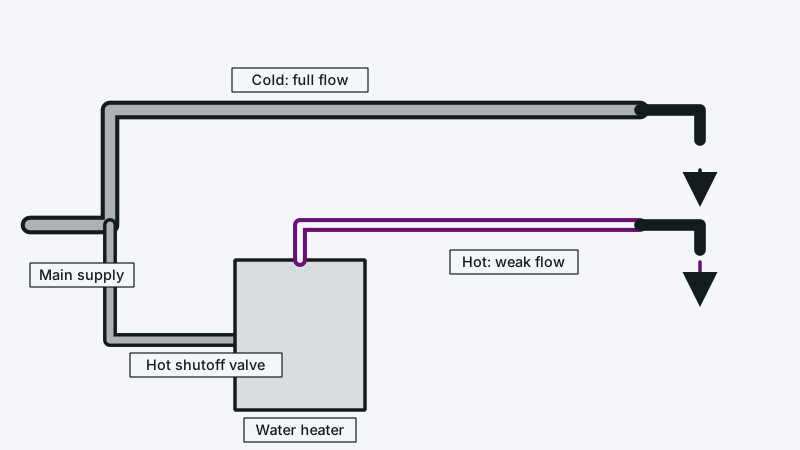
If hot water pressure is low while cold is normal, the cause is on the hot side: sediment in the water heater, a valve left partly shut, a clogged fixture or a corroded hot line. If both are weak, the water heater is probably not to blame. A plumber can find it in one visit. This page sits under our water heater repair guide.
Why is my hot water pressure low but cold water is fine?
The most likely cause is sediment inside the water heater that partly blocks the hot outlet. Minerals in hard water settle in the tank and can clog the outlet fittings. The list continues with a hot shutoff that has not been opened all the way, a blocked aerator or showerhead, and scale or corrosion inside the hot supply pipe.
Bob Vila names heater sediment as the top suspect when only the hot side runs weak, and recommends flushing the heater first. It also lists mineral buildup, clogged aerators and showerheads, and corroded or outdated pipes in older homes.
Compare it against the cold side:
| Hot only is weak | Both hot and cold are weak |
|---|---|
| Sediment in the water heater | Partly closed main valve |
| Hot-side valve or flex connector | Failing pressure regulator |
| Scale in a fixture's hot inlet | Hidden leak or main line problem |
| Corroded hot pipe | Low supply from the utility |
Check one fixture at a time. If only the master shower is weak, the fixture is the issue. If the kitchen, bathroom and laundry are all weak on hot, the heater or the hot line is the suspect.
What should I check first when hot water pressure is low?
Begin with the easy checks. Take off the faucet aerator and inspect it for grit, soak the showerhead in vinegar, and make sure the heater's valves are wide open. Then see if the problem repeats at every hot tap. If it does, the cause is upstream, at or near the heater.
A short checklist you can do without tools:
- Test several taps. Hot weak at all of them points to the heater or the hot main. Weak at one points to that fixture.
- Clean the aerator and showerhead. Bob Vila says soaking a showerhead in vinegar can dissolve scale.
- Check the shutoff valves. The hot outlet valve at the heater and the main should be fully open. A valve that was only partly reopened after a repair is a frequent cause.
- Check the washing machine and dishwasher inlet screens. They can fill with grit.
- Hunt for stray water. A damp wall, or a meter that spins while everything is off, suggests a leak.
Residential pressure is typically 40 to 80 PSI, and a low-cost gauge threaded on the outside hose bib reads your supply pressure. Do not install a booster before ruling out leaks, because Bob Vila warns that boosting can make leak damage worse.
Can sediment in the water heater cause low hot water pressure?
Yes. Minerals gradually drop to the floor of the tank, and the layer can climb to the hot outlet or plug the drain. The heater then delivers less water and may rumble or bang. A flush that drains the tank and clears the sediment often restores flow. If the buildup is severe, the tank may need replacing.
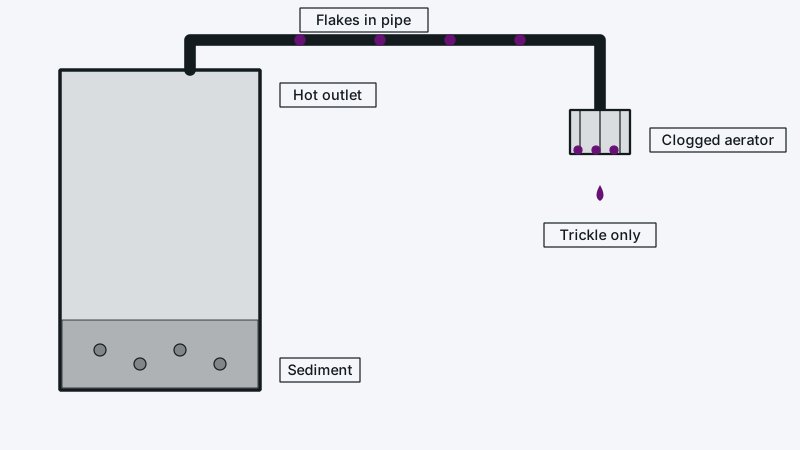
Hardness is the driver. Burbank Water and Power and Glendale Water and Power, both city utilities, and LADWP in the Los Angeles neighborhoods of the Valley, each publish an annual water quality report that lists the minerals in your supply. Bob Vila says hard water can shorten a heater's life by two years or more, so a heater that is eight or nine years old and clogged is often not worth fixing.
What a plumber looks at here:
- The condition of the drain valve, since a plastic valve may break during a flush. See drain valve replacement.
- The inside of the tank, as heavy sediment can be a sign of an eaten-away anode and a nearing end of life.
- The cold inlet, because a failing dip tube can send grit through the hot side.
Tankless water heaters have the same problem in a different form. Wikipedia notes scale in the heat exchanger can block small channels and cause overheating shutdowns. A descaling flush, the same kind covered under instant water heater repair, usually clears it.
Could old pipes be the reason for low hot water pressure?
Yes, particularly in older homes. Galvanized steel supply pipe, which was used in many postwar houses, corrodes from the inside and narrows over decades. Hot water speeds up that corrosion, so the hot line can choke before the cold line does. A plumber can confirm it, and the fix is repiping the affected run.
Signs of pipe trouble include brown or rusty water when a hot tap first opens, pressure that has dropped gradually over years, and weak flow in the rooms farthest from the heater. Repiping is a larger job than a flush, so a plumber should diagnose it first. Ask them to test pressure at the heater outlet and at a tap, since a difference between the two shows where the restriction sits.
If the water heater is old as well, it can be sensible to plan both together. Our guide on how often a water heater needs replacing helps you weigh it, and pricing is covered in our water heater replacement cost guide.
Time to get it checked? File a quote request and a plumber from the area will be lined up. Say which taps are weak and how old the heater is. More of what we do is on the Lankershim Plumbing home page.
Questions people ask
How long does a low hot water pressure fix take?
A plumber can clean aerators or flush a heater in under two hours, and swapping a bad valve or connector takes about the same. If the cause is a corroded hot line or a failing heater, the job grows to a half day or more. A diagnostic visit tells you which of these you have.
What questions should I put to a plumber about low hot water pressure?
Have them measure hot and cold pressure up front and explain the readings. Ask for a written price that separates a flush, a part, and any piping work. Look up the plumber's California contractor license at cslb.ca.gov, and find out their plan if flushing fails to help.
Must I be there while low hot water pressure gets repaired?
Yes. Have an adult on hand to unlock the heater, the shutoffs and the weak fixtures, and to okay extra work. The supply will be shut off during part of the visit. If the heater is in a garage or closet, clear a path to it.
Is low hot water pressure a sign my water heater is failing?
It can be, especially in a heater over eight years old with heavy sediment. A flush may bring pressure back, but if the tank is rusting, the sediment is returning fast, or the tank leaks, replacement is the better path. Rule out clogged fixtures and old pipes first.
Will a water softener fix low hot water pressure?
A softener reduces scale, so it can slow the buildup that chokes heaters and fixtures, but it does not remove sediment already inside. A plumber will usually flush the tank first. If your hard water is the root cause, ask whether a softener or filter suits your home and local rules.
References
Updated