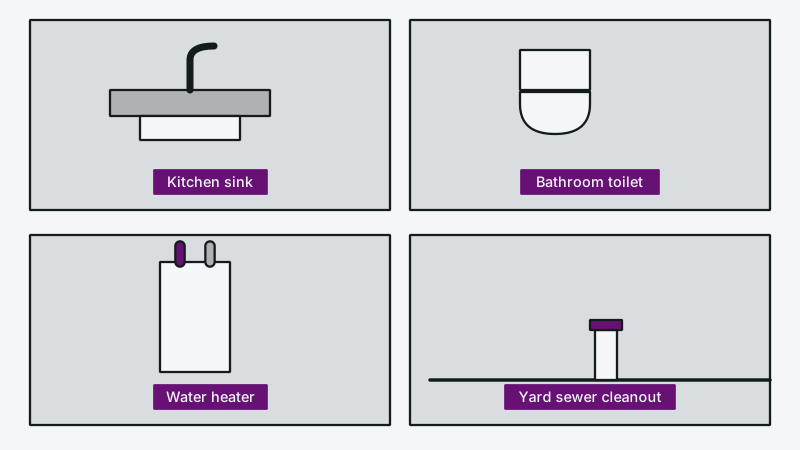
Plumbing service covers the water entering your home, the waste leaving it and the gas piping and appliances connected to both. In practice that means leaks, clogs, water heaters, toilets, faucets, shutoff valves and repiping. For homes in Burbank, Glendale and the San Fernando Valley, we at Lankershim Plumbing send a local plumber to your address to examine the problem and hand you a written quote ahead of any work. The sections below cover what the work includes, how long it runs, what older Valley houses tend to need, and how to separate a solid plumbing company from a risky one.
What are some reputable plumbing companies in the US?
No list can say which company is reputable for your house, so check the company rather than trust a ranking. In California, a business that takes plumbing jobs of $1,000 or more must hold a contractor license issued by the Contractors State License Board. Any license can be looked up on the CSLB site, where you can see its status and read the bond and workers' compensation details before agreeing to anything.
A reputable company also writes down the scope, price and payment schedule, offers its license number unprompted and does not ask for a big deposit. For home improvement work, California limits the down payment to 10 percent of the price or $1,000, whichever is lower, with narrow exceptions.
National chains, small family outfits and one-person shops can each be good or bad. The license, the paperwork and how plainly they answer questions are what count. Our guide to choosing a plumber takes you through the checks in order.
What does a service plumber do?
A service plumber is who you call when something already installed stops working. The job is tracing the cause of a leak, clearing a drain, swapping a worn valve or fixture, restoring hot water and testing the result. New-construction work is different: those plumbers rough in pipe before the walls close.
The US Bureau of Labor Statistics describes the trade as installing, maintaining and repairing water, gas and drainage systems, reading local codes and preparing cost estimates. A good service plumber also does something less obvious, which is to say whether you face a repair, a replacement or a hint of a bigger problem, so your decision rests on facts.
Where does a plumber work?
A plumber goes wherever water, drains or gas piping run: inside walls, beneath floors, in crawl spaces and attics, under slabs, out in the yard at the water meter and sewer cleanout, and at the appliances those lines feed. Hillside Burbank homes often have tight subfloor crawl spaces, while Valley tract homes tend to bury much of the plumbing under a concrete slab.
Some work is outdoors. The main shutoff valve, the pressure regulator, hose bibs and the irrigation line all sit on the property side of the meter, so they generally fall to the owner, while the meter itself belongs to the utility. Burbank Water and Power serves Burbank; Glendale Water and Power serves Glendale; LADWP serves the Los Angeles neighborhoods of the Valley.
How long does a typical plumbing job take?
Plenty of repairs finish within one to three hours: a new faucet, toilet fill valve or supply line, or a simple drain clearing. A water heater swap usually takes half a day, counting permit steps and gas and venting checks. Repiping a house, replacing a sewer line or fixing a leak beneath a slab can stretch over days, since floors and walls have to be opened and closed.
Access drives the time more than anything. A shutoff that will not turn, a pipe sealed in a wall with no access panel, or an old drain that crumbles at a touch can double a job. Ask for the plumber's time estimate, and for what could change it.
What is the most common plumbing service call?
Most plumbers field clogged drains and leaking or running toilets more than anything else, then faucet and supply line leaks and water heater trouble. In Valley homes with aging cast iron and clay drains, root intrusion and sluggish main lines come up a lot. The first sign for many households is a slow sink or a gurgling toilet.
If that matches your problem, read clearing a kitchen sink, fixing a running toilet or the emergency page for a pipe leaking right now.
What are old house plumbing problems in a Burbank tract home?
Homes from the 1940s through the 1960s often have galvanized steel supply pipe, copper patched more than once, and drains made of cast iron or clay. Galvanized pipe rusts from within and chokes flow until low pressure and rusty water appear. Cast iron cracks and rots along the pipe's bottom. Clay joints invite roots.
More things to watch for in an older house:
- Lead, or solder containing lead, on very old copper joints
- Water heaters in a closet with no drip pan or proper strapping
- Shutoff valves untouched for decades that now leak or seize
- Additions plumbed without a permit
An old house rarely has a plumbing diagram. A plumber maps the system along the way: the main shutoff, which lines are copper or galvanized, the cleanout, and where the drain leaves the house. Photograph and label each once the plumber finds it. If you suspect the house needs new supply lines, read about whole-house repiping and the price of replacing plumbing in an old house.
What is a water pipe repair sleeve?
A repair sleeve, also called a repair coupling, is a clamp or slip-on fitting that seals a small split or pinhole without cutting out a long length of pipe. A plumber might fit one on copper, PEX or even galvanized pipe to stop a leak where it can be reached. It is a patch, not a cure for pipe failing along its whole length.
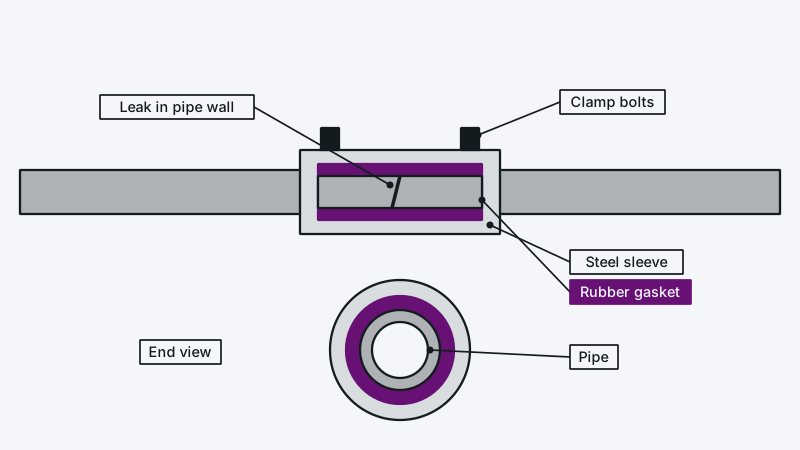
When the same line leaks twice, a sleeve is only a bandage. Corroded galvanized pipe tends to leak again a few feet from the repair, and then replacing the run costs less than repeat calls. Do not seal a sleeve inside a closed wall without telling the next owner.
What happens when a pipe bursts under your house?
Water follows the easiest path, usually soaking the soil and the underside of the floor, while your meter and bill climb. Close the main shutoff valve immediately, cut power to any wet area only if the panel is safe to reach, and call a plumber. If water is near outlets or the panel, dial 911 and keep out.
Slab homes hide leaks in another way: a floor that feels warm in one spot, running water you can hear with everything shut off, or a meter that will not sit still. See slab leak detection and what to do with a burst pipe.
Does homeowners insurance cover broken pipes under a slab?
It often pays for the damage the water causes, but not always for repairing the pipe itself, and policies treat slab leaks differently. Wear, corrosion and long-term seepage are commonly excluded, while a sudden burst is likelier to be covered. Your policy wording decides, so read it, and phone your insurer first, before any repair contract is signed.
Hold on to the plumber's written report and photos, which an adjuster will ask for. Our page on whether a burst pipe is covered by insurance goes further.
We serve Burbank, Glendale and neighborhoods such as Sherman Oaks and Encino, so the old-house problems above are the ones we plan for.
Questions people ask
What do plumbers reach for in place of Drano?
Plumbers normally clear clogs mechanically, with a hand auger or drain machine on a sink or toilet, a bigger cable machine on main lines, and a high-pressure water jet for tough cases. Chemical drain cleaners can burn skin, eat at older pipes and injure the next person to open the trap. At home, a plunger or hand auger is the safer first move.
Is Roto-Rooter cheaper than a plumber?
No general answer exists, because prices depend on the job, the hour and each company's own rate sheet, and franchises set their own. Gather two or three written quotes covering identical work from contractors who hold a valid CSLB license, then compare them. Ask what is included, whether a trip charge applies, and whether the quote stands if the plumber finds something else.
Can plumbers handle gas problems?
Many do, including gas lines to water heaters, stoves and dryers, but gas piping is regulated, so only a contractor whose license covers it may do the work, often under a permit. If you smell gas, step outside first. Then phone SoCalGas on 1-800-427-2200, or 911 where there is danger.
What is the training path to becoming a plumber?
Most plumbers train through a four or five year apprenticeship, with about 2,000 paid on-the-job hours a year plus classroom time, according to the US Bureau of Labor Statistics. California has its own contractor license rules, which also hinge on documented experience and exams. Ask whoever does the work which license covers it.
Which is the best plumbing company?
The one that can show a valid California contractor license, writes its quote down and explains the work plainly. Be wary of any site that ranks the best plumbers, since rankings can be bought or inflated. Look the license up with CSLB, skim recent reviews on a few platforms, and compare quotes. To skip the hunt, send us a quote request and a visit gets arranged.
References
Updated