Gas safety is the first rule. On smelling gas near the heater, get out of the building, phone SoCalGas (1-800-427-2200) from outdoors, and ring 911 if there is any danger to people. Light nothing, flip no switches and use no phone indoors. Everything below assumes there is no gas smell. For the wider choices around tanks and repairs, see our hub on water heater repair in Burbank.
What are the most common problems with a gas water heater?
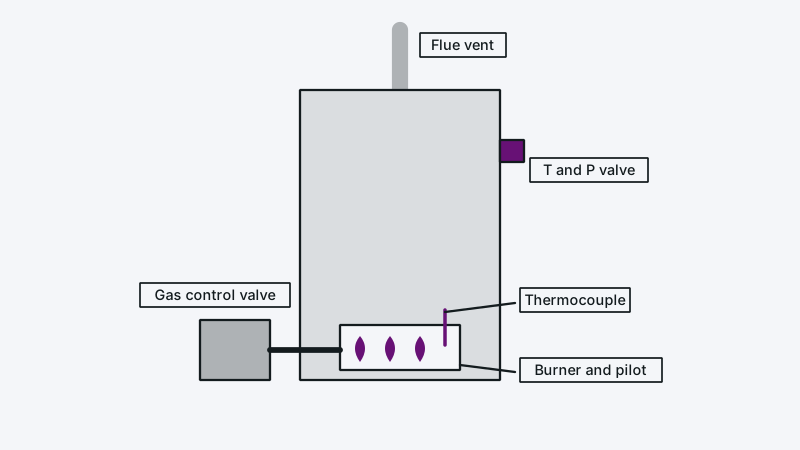
Typical faults include a pilot that keeps going out, a failed thermocouple or flame sensor, a bad gas control valve, a sooty or clogged burner, a blocked flue, a leaking relief valve, and sediment in the tank. Most show up as one of three symptoms: no hot water, too little hot water, or odd noises or smells.
The table below pairs each symptom with its likely cause:
| Symptom | Likely cause |
|---|---|
| No hot water, no flame visible | Pilot out, thermocouple, gas control valve |
| Pilot lights but goes out when you release the knob | Worn thermocouple or thermopile |
| Not enough hot water | Sediment, dip tube, thermostat setting, undersized tank |
| Rumbling or popping | Scale and sediment on the tank floor |
| Yellow, lazy flame or soot | Poor combustion air, dirty burner, venting issue |
| Water at the base | Relief valve, fitting, or tank leak |
| Rotten egg smell | Gas leak, or sulfur bacteria in water, treat as gas until proven otherwise |
For the pilot specifically, we have a separate page on pilot light repair, and for gas valve faults, see gas valve replacement.
Which gas water heater repairs can I do myself?
Stay with visible, non-gas jobs: reading the thermostat dial, looking in the pilot window, draining a few quarts of sediment from the drain valve, and watching the relief valve for drips. Anything that opens a gas connection, swaps the gas control valve, or touches the flue is a plumber's work.
These checks are safe, with the manufacturer's label as your guide:
- Look at the dial. Make sure it is not set to off or vacation.
- Confirm the gas supply valve to the heater is open. Its handle lines up with the pipe when open.
- See whether other gas appliances work, which shows whether the supply is on.
- Look through the pilot window if your model has one. Blue is the normal flame color. A yellow flame, or none at all, means it is time to call.
- Look at the exhaust flue. It should be intact, sloped up and attached.
Both the law and common sense stop short of gas piping and appliance gas work. Our page on do-it-yourself water heater repairs sets out what suits an owner and what does not.
Is a gas water heater a carbon monoxide risk?
It burns gas indoors, usually in a garage, closet or utility room, and sends the exhaust up a flue. When the flue is blocked, disconnected, backdrafting or poorly sloped, combustion gases including carbon monoxide can get into the home. That is why venting and combustion air belong in any gas heater inspection.
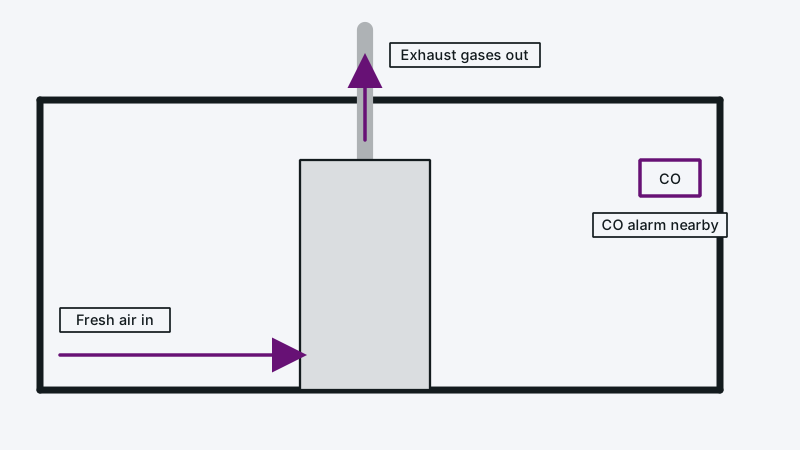
Watch for soot around the draft hood or on the tank, a flame that rolls out or flickers, a flue with warm joints or rust streaks, and headaches or dizziness while the heater runs. Carbon monoxide has no smell. Keep working carbon monoxide alarms in the house, and if one sounds, bring everyone outside and call 911.
Many Valley houses from the postwar tract-home era keep the heater in an attached garage, where cars, storage and paint add to the risk. Keep the area around the heater clear, store flammables elsewhere, and leave the air openings unblocked.
What does a plumber check on a gas water heater repair visit?
The first step is ruling out a gas leak. After that the plumber examines the pilot and flame sensor, the thermocouple or thermopile, the gas control valve, the burner and its tray, the flue and draft, the relief valve and the condition of the tank. Cleaning or replacing a small part resolves many faults.
The visit usually goes like this:
- The plumber asks about symptoms and checks for gas smell and carbon monoxide risks.
- Water temperature and pilot status are checked, and the burner is watched while it runs.
- The thermocouple or flame sensor is tested. These small parts wear out and are cheap.
- The venting is inspected, including slope, joints and draft.
- Sediment, anode condition and the relief valve are assessed. Valley water is hard, which accelerates scale.
- Any repair beyond the first diagnosis comes with a written price.
Not every fault is a repair. If the tank leaks, a repair will not fix it.
When is a gas water heater worth repairing?
Worth repairing: a sound tank with a single part at fault, such as a thermocouple, gas control valve, relief valve or a burner needing cleaning. Repair does not pay when the tank leaks, is badly rusted, or has needed several repairs in a short time. Age counts, but the tank's condition decides.
Repair is sensible when:
- The tank is on the younger side and not leaking.
- The fault is a known single part.
- The repair costs well under a replacement. Our gas water heater replacement cost page explains the factors behind a new unit's price.
If you do replace it, water heater installation by a plumber includes a permit and strapping. Replacement makes sense when:
- Water is coming from the tank body.
- The tank is old and corroded at the base.
- You have already had more than one repair this year.
- Burner or venting problems point to a heater that no longer meets code. Our guide on how often a water heater needs replacing helps.
A replacement needs a permit. Our page on permits for water heater replacement covers who issues it for your address, and replacement itself is covered in hot water heater replacement. Tankless water heaters are an alternative, with their own gas and venting needs, covered on our tankless versus tank page.
How do I arrange a gas water heater repair?
Give the symptoms, the make and age of the heater and whether you smell gas. If you do smell gas, phone SoCalGas first. For everything else, book a visit with the quote page. Someone local comes out and gives a written price ahead of any work. The steps are on how it works.
With no hot water right now and a need for same-day help, read our page on emergency hot water heater repair. Another starting point is the Lankershim Plumbing home page.
Before booking, look up any contractor's license on the state's contractor licensing board website. Gas appliance work belongs to the plumbing trade.
Questions people ask
Why is my gas water heater not heating?
Often the pilot has gone out, the thermocouple has worn, the gas supply valve is shut, or the thermostat sits too low. In an old tank, sediment can also insulate the water from the flame. When the pilot refuses to stay lit, or you smell gas, stop and phone a plumber. Do not keep trying to relight it.
How long does a gas water heater repair take?
A simple repair like swapping a thermocouple or cleaning the burner may take under an hour. Replacing a gas control valve or fixing the venting can take longer, and a flush adds time. The plumber should confirm the cause first, then put the price and timing in writing.
Is a gas water heater repair expensive?
Small parts such as thermocouples are inexpensive beside a new heater. A gas control valve is pricier, and labor adds to both. We do not print flat figures, since they depend on the unit and the fault. Only the written quote gives the real price, and it should list parts and labor on separate lines.
Can I relight my gas water heater myself?
Many owners do, following the heater's label instructions, and it is an ordinary task when there is no gas smell. Stop if the flame will not hold, goes out repeatedly, or gives off a gas smell at any time. Relighting again and again hides a fault such as a worn thermocouple or a draft problem.
Do I need a permit to repair a gas water heater?
Swapping parts inside the heater is usually repair work with no permit, while replacing the entire heater normally needs one. Rules differ by city, so check with Burbank's Building Division, Glendale Building and Safety or LADBS, whichever covers your address. A plumber can say which applies.
References
Updated